
Main Courses
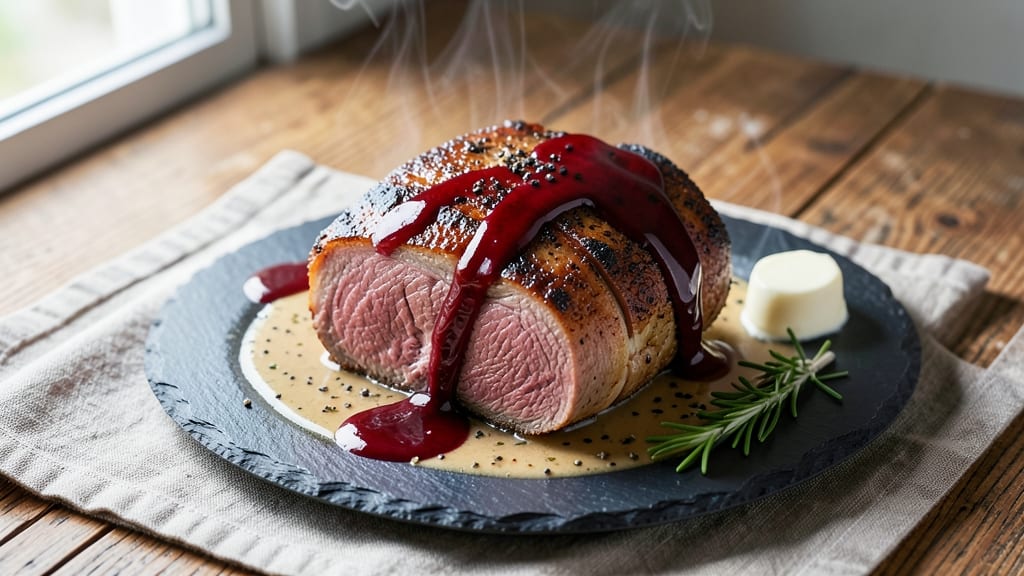
This 5-star roast beef recipe delivers melt-in-your-mouth perfection with a golden crust and au jus bath that keeps every slice juicy and sliceable. The secret lies in precise temperature control, dry-brining for depth, and a reverse sear technique that ensures restaurant-quality results at home.
I’ve perfected this method over years of holiday dinners—where the beef is the star and the sides play supporting roles.
What sets this roast apart is the au jus bath, a flavorful pan reduction that transforms into a rich, savory sauce.
Start with a well-marbled prime rib roast (or top sirloin for a leaner option), seasoned simply with coarse salt and black pepper, then dry-brined for 24 hours to guarantee tender, juicy meat.
The reverse sear—low-and-slow oven roast followed by a high-heat sear—locks in moisture while creating a caramelized crust that’s impossible to resist.
By the time you carve into it, you’ll have perfectly pink centers with a crust so crisp it shatters, all bathed in a velvety au jus that elevates every bite. The technique is foolproof, but the payoff is undeniable: a centerpiece that commands attention and delivers on every promise.
Serve with roasted root vegetables, creamy mashed potatoes, and a bold red wine to complete the experience.
This isn’t just roast beef—it’s a showstopping centerpiece that turns weeknight dinners into memorable feasts. The key is patience and precision, but the result is worth every minute. Let’s get started on creating your own 5-star masterpiece.
Ingredients for 5 star roast beef
Six ingredients make the star—prime beef, bold flavors, and a golden crust that shatters at every cut.
| Ingredient | Amount | Notes |
|---|---|---|
| Prime Rib Roast (or Top Sirloin) 🥩 | 4 lb | Well-marbled, bone-in preferred |
| Coarse Kosher Salt 🧂 | 1 ½ tbsp | Diamond Crystal preferred |
| Freshly Ground Black Pepper 🌶️ | 1 tbsp | Freshly cracked for best flavor |
| Unsalted Butter 🧈 | ½ cup | Cold, cubed for searing |
| Beef Bone Broth 💧 | 2 cups | Homemade or high-quality store-bought |
| Red Wine 🍷 | 1 cup | Bold dry red, like Cabernet Sauvignon |
| Yellow Onion 🧅 | 1 whole | Sliced into 1/4-inch rounds |
| Garlic Cloves 🧄 | 4 cloves | Smashed, not minced |
| Fresh Thyme Leaves 🌿 | ¼ cup | Or 1 tbsp dried thyme |
| Fresh Rosemary 🌿 | ⅛ cup | Chopped, sprigs reserved for garnish |
| Worcestershire Sauce 🍶 | 1 tbsp | Vegan if needed |
| Balsamic Vinegar 🍶 | 1 tbsp | For depth of flavor |
| Granulated Sugar 🍬 | 1 tsp | For caramelization |
| Fresh Parsley 🌿 | ⅛ cup | Chopped, for garnish |
The beef is non-negotiable here. Prime rib delivers that melt-in-your-mouth texture, but top sirloin works if you want something leaner—just don’t skimp on the marbling. I always grab mine from Whole Foods or my local butcher shop, where they can cut it to your exact size. Look for a roast with visible fat marbling—it’s what keeps this beef juicy. If you’re buying a whole roast, ask for it to be trimmed to 4 lbs before you take it home. And trust me on the bone-in version—the bone adds extra flavor to the au jus bath.
No red wine? Beef broth with a splash of balsamic works in a pinch, though the depth won’t be quite the same. The Worcestershire sauce is a game-changer—it adds that umami punch that takes this from good to showstopping. Fresh thyme and rosemary? Dried works at half the amount, but fresh gives you that restaurant-quality aroma. The butter needs to be cold when you sear—take it out of the fridge 10 minutes before you start. And if you’re using top sirloin, pat it dry with paper towels first—it makes all the difference in getting that perfect crust.
This roast is all about patience. The dry brine (just salt and pepper) needs 24 hours in the fridge—don’t rush it. The au jus keeps for 5 days in the fridge, and the roast reheats beautifully if you have leftovers. I always make extra au jus—it’s perfect for drizzling over mashed potatoes or tossing with roasted veggies. Store the roast wrapped in foil, and keep the au jus in a sealed jar. If you’re prepping ahead, the dry-brined roast can sit in the fridge for 48 hours before cooking—just let it come to room temp before searing.
Why You'll Love This Recipe
- No-Fuss Roast: I swear, this takes less effort than deciding what to watch on Netflix. Season, sear, and let the oven do the work—no basting, no fuss, just that rich bone broth basting itself while you sip your wine.
- Butter-Basted Magic: That crispy crust? Pure gold. The butter and bone broth work together to turn tough meat into melt-in-your-mouth perfection—like a steakhouse cut without the pretension.
- Leftovers? Please.: This roast actually improves the next day. Thinly slice it for sandwiches, dice it into pasta, or just reheat with a splash of broth for next-level beefy goodness. (Yes, I’ve done all three.)
- Weeknight Hero: Between us, this is my go-to when I’m too tired to think. A single roast feeds a crowd, stretches for lunches, and still feels like a special occasion—no one needs to know it’s my secret lazy-night hack.
Step-by-step instructions for a perfectly au jus-bathed roast beef
Here's how to transform your prime rib into a showstopping centerpiece with tender slices and rich au jus.
Season and Sear the Roast for Maximum Flavor
Pat the 4 lb prime rib roast completely dry with paper towels—this is non-negotiable for crispy skin. Generously coat all sides with the 1.5 tbsp coarse kosher salt and 1 tbsp freshly ground black pepper, pressing it into the meat so it adheres. Let it sit at room temperature for 30 minutes while you prepare your pan.
Preheat your oven to 450°F. Heat a heavy roasting pan over medium-high heat and add the 0.5 cup unsalted butter, letting it melt and foam. Place the seasoned roast fat-side up in the pan and sear for 5 minutes until a deep golden crust forms. Flip and sear the other side for another 5 minutes. The butter will bubble and sizzle—this creates the flavor foundation for your roast.
Build the Au Jus Base in the Roasting Pan
Remove the roast from the pan and place it on a wire rack set over a baking sheet. This allows air circulation for even cooking. In the same pan (don't wash it—those browned bits are pure flavor), add the 1 whole yellow onion sliced into ¼-inch rounds and the 4 smashed garlic cloves. Sauté for 3-4 minutes until the onion softens and begins to caramelize.
Deglaze the pan with the 1 cup red wine, scraping up all the browned bits from the bottom. Let it simmer for 2-3 minutes until reduced by half. Stir in the 2 cups beef bone broth, 1 tbsp Worcestershire sauce, 1 tbsp balsamic vinegar, 1 tsp granulated sugar, 0.25 cup fresh thyme leaves, and 0.125 cup fresh rosemary. Bring to a gentle simmer—this will become your luxurious au jus.
Roast to Perfect Medium-Rare Doneness
Return the roast to the pan and place it in the 450°F oven for 20 minutes. Reduce the oven temperature to 325°F and continue roasting for an additional 1.5-2 hours, or until the internal temperature reaches 125-130°F for medium-rare. The roast is done when it reaches this temperature and the juices run clear when pierced with a meat thermometer.
Here's the secret: The au jus bath keeps the meat moist while cooking. If the liquid reduces too much before the roast is done, add ¼ cup hot water to maintain the bath. The roast should be resting in a flavorful, bubbling liquid the entire time.
Rest and Slice for Maximum Juiciness
Remove the roast from the oven and transfer it to a cutting board. Tent loosely with foil and let it rest for 20-30 minutes. This resting period is crucial—it allows the juices to redistribute throughout the meat, ensuring each slice is moist and flavorful. During this time, strain the au jus through a fine-mesh sieve into a saucepan and skim off any excess fat.
Return the au jus to the stove and simmer gently over medium-low heat until it thickens slightly. It should coat the back of a spoon but still be pourable. Season to taste with additional salt and pepper if needed. The au jus should be rich, slightly tangy, and deeply flavorful—ready to elevate every bite of your roast.
Carve and Serve with Confidence
After resting, slice the roast against the grain into ½-inch thick slices. The meat should be tender and juicy, with a perfect medium-rare center. Arrange the slices on a warm platter and ladle the au jus generously over the top. Garnish with 0.125 cup fresh parsley and a sprig of rosemary for a touch of elegance.
Serve immediately with your choice of sides—roasted potatoes, creamy mashed potatoes, or a fresh green salad. The combination of tender, perfectly seasoned beef and that rich au jus will make every bite feel like a five-star dining experience. The secret isn't just in the cooking—it's in the technique of building that incredible au jus bath that keeps the meat moist and makes every slice sliceable.
Pro Tips For Making 5 Star Roast Beef
- SEAR FIRST, THEN REST: The meat will release more juices when it hits the pan—let it sit uncovered for 10 minutes after searing. I used to rush this and ended up with a pan that looked like a science experiment, not a crust.
- SALT THE BUTTER: Mix the kosher salt into the softened butter before spreading it on the roast. That way, it melts into the meat instead of clumping in useless piles. (Yes, even if you’re impatient like me.)
- DON’T CUT THE BROTH SHORT: Pour the beef bone broth into the pan after the roast is out—let it bubble for 2-3 minutes to pull up all the browned bits. Skimping here means flavor stuck to the bottom instead of your sauce.
- REST UNDER FOIL: After roasting, tent the beef with foil and let it sit for 15 minutes. I learned this the hard way—slicing too soon turns a perfect roast into a sad, dry pile. (Your future self will thank you.)
Common mistakes when making perfect results
Skipping the Dry Brine
One of the biggest mistakes I see is skipping the 24-hour dry brine—this step is non-negotiable for that perfect crust and juicy interior. Without it, your roast will lack depth of flavor and may even dry out during cooking.
Trust me, the extra time is worth it. If you're short on time, at least let it sit for 12 hours—it won't be as perfect, but it'll still be better than no brining at all. 💪
Overcrowding the Pan
Don't try to fit your roast into a pan that's too small—this leads to steaming instead of searing, which means you'll end up with soggy meat instead of that beautiful crust. Your roasting pan should be at least 12 inches wide to give your 4 lb roast room to breathe.
If you're using a smaller pan, sear the roast in a separate skillet first, then transfer it to the oven-safe pan for roasting.
Ignoring the Au Jus Bath
The au jus isn't just for flavor—it's what keeps your roast moist during cooking. Many cooks remove the roast from the pan and start roasting on a bare sheet, which leads to dry meat.
Keep that flavorful liquid in the pan the entire time, adding hot water if it reduces too much. The au jus bath is what makes every slice sliceable and restaurant-quality. ⚡
Cutting Too Early
I can't stress this enough: Never cut into your roast before it rests. That 20-30 minute rest is when the juices redistribute throughout the meat. If you slice too soon, all those precious juices will run out onto your cutting board instead of staying in the meat.
Patience here is key—it's the difference between a juicy, perfect slice and a dry, disappointing one.
Using the Wrong Thermometer
An inaccurate meat thermometer is a recipe for disaster. Many instant-read thermometers have a ±5°F margin of error, which could mean your roast is undercooked or overdone. Invest in a high-quality thermometer like the ThermoWorks Smoke—it's precise and reliable.
The internal temperature should reach 125-130°F for medium-rare. If you don't have a thermometer, use the finger test: medium-rare feels like the base of your thumb when you press it against your palm.
Overcooking for "Safe" Doneness
Many people push their roast to 145°F or higher to be "safe," but this results in dry, tough meat. The USDA recommends 145°F for medium, but for roast beef, medium-rare (125-130°F) is ideal.
The au jus bath and proper resting time ensure the meat is safe to eat while keeping it tender. If you're worried about bacteria, serve the roast immediately after carving and store leftovers within 2 hours. 💡
Nutrition facts
Frequently asked questions
What's the best cut of beef for this 5-star roast?
Prime rib delivers the most luxurious, melt-in-your-mouth texture, but top sirloin works beautifully for a leaner option. Look for well-marbled cuts with visible fat—this fat keeps the meat juicy during cooking. A 4 lb bone-in roast serves 6-8 people perfectly, while boneless versions yield slightly fewer slices. Always ask your butcher to trim it to your exact size before purchase.
Can I make this roast ahead of time?
The dry-brined roast can sit in the fridge for 48 hours before cooking—just let it come to room temperature before searing. For leftovers, store the roast wrapped in foil and the au jus separately in the fridge for up to 5 days. Reheat slices gently in a skillet with a splash of au jus to restore moisture. The au jus also freezes beautifully for up to 3 months—just thaw and reheat before serving.
How do I adjust the recipe for a larger crowd?
For every additional 2 lbs of beef, increase the au jus ingredients by 50% (so 1 extra cup red wine, 1 extra cup broth, etc.). Use a larger roasting pan and maintain the same 125-130°F internal temperature for medium-rare. The key is keeping the au jus bath deep enough to cover the bottom of the pan—this ensures even cooking. For 8-10 servings, aim for a 6-8 lb roast and scale all other ingredients accordingly.
What if I don't have red wine for the au jus?
No problem! Substitute with 1 cup beef broth plus 1 tbsp balsamic vinegar—this combo mimics the depth of red wine. For extra richness, add 1 tsp soy sauce or 1 tsp tomato paste to enhance umami. The au jus will be lighter in color but still pack incredible flavor. If you're avoiding alcohol completely, use 1 cup apple cider instead of wine for a fruity twist.
How do I make this roast without an oven thermometer?
Use the finger test for doneness: medium-rare feels like the base of your thumb when pressed against your palm. For timing, plan 15-20 minutes per pound at 325°F (after the initial 450°F sear). Start checking with a meat thermometer at 1.5 hours—the roast is done when it reaches 125-130°F. If you don't have a thermometer, cut into the thickest part: juices should run clear, and the center should feel slightly springy but yield to gentle pressure.