
Soups & Stews
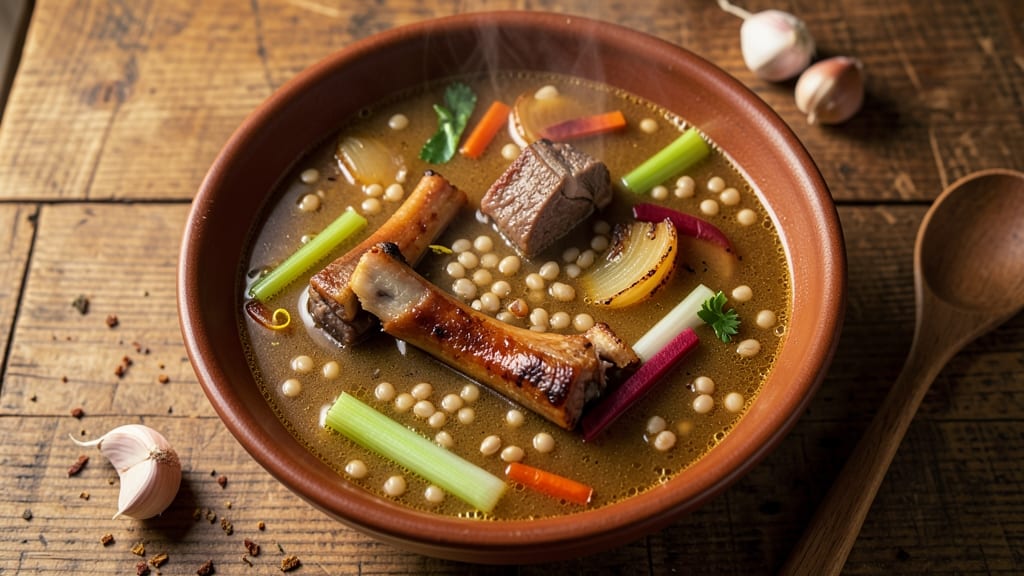
This beef barley soup recipe with soup bones transforms simple ingredients into a deeply flavorful, comforting meal that simmers with restaurant-quality richness. The secret lies in using soup bones, which release collagen and minerals over hours of slow cooking, creating a velvety broth that forms the soul of every spoonful.
I've perfected this method over years of testing—balancing the earthy nuttiness of barley with tender beef and aromatic vegetables for a soup that's both hearty and harmonious.
The process begins with a deep, flavorful broth built from soup bones, onions, and herbs that infuse the liquid with depth. As the soup simmers, the barley softens just enough to hold its shape while absorbing the rich flavors, while the beef becomes fork-tender.
This isn't just soup—it's a one-pot meal that delivers warmth, nutrition, and satisfaction in every bowl, perfect for chilly evenings or when you crave something truly comforting.
What makes this recipe stand out is the balance of textures and flavors: the subtle sweetness of caramelized onions, the hearty bite of barley, and the tender beef all come together in a broth that's rich yet never heavy.
The soup bones ensure a depth of flavor you simply can't achieve with regular beef cuts, while the slow simmering process develops complexity that transforms this into something truly special.
Whether you're preparing for a family gathering or simply treating yourself to a nourishing meal, this beef barley soup delivers on every level. The instructions are straightforward, but the results are anything but ordinary—this is the kind of soup that stays with you long after the last bite.
Let's get started on creating a pot of soul-warming goodness.
Ingredients for beef barley soup recipe with soup bones
The soul of this soup starts with soup bones and builds on barley's earthy richness.
| Ingredient | Amount | Notes |
|---|---|---|
| Beef Soup Bones 🦴 | 3 lb | Knuckle or marrow bones preferred |
| Yellow Onions 🧅 | 2 whole | Medium size, roughly chopped |
| Carrots 🥕 | 4 whole | Medium size, peeled and chopped |
| Celery Stalks 🌿 | 4 whole | Fresh, roughly chopped |
| Garlic Cloves 🧄 | 6 cloves | Peeled, lightly crushed |
| Pearl Barley 🌾 | 1 ½ cups | Rinsed before cooking |
| Chuck Roast 🥩 | 2 lb | Cut into 1-inch cubes |
| Tomato Paste 🍅 | 2 tbsp | High-quality, no sugar added |
| Dried Thyme 🌿 | 1 tsp | Or 1 tbsp fresh thyme leaves |
| Bay Leaves 🍃 | 2 whole | Fresh preferred, dried works |
| Black Peppercorns 🌶️ | 1 tsp | Freshly cracked |
| Salt 🧂 | 2 tsp | Kosher or sea salt |
| Fresh Parsley 🌿 | ¼ cup | Chopped, for garnish |
| Water 💧 | 12 cups | Filtered preferred |
Soup bones are non-negotiable here—they release collagen and minerals that transform ordinary broth into something velvety and deeply flavorful. Look for knuckle or marrow bones at your local butcher shop or grocery store meat counter; they're often sold specifically for broth. If you can't find them, beef shank bones work too, though they'll yield slightly less gelatin. The key is to roast the bones first (375°F for 30 minutes) to deepen their flavor before simmering. For the barley, pearled barley cooks faster than steel-cut, but don't skip rinsing it first—removes excess starch that can make the soup gummy. The chuck roast should be cut into even 1-inch cubes for consistent cooking.
No soup bones? Substitute with 3 lbs beef shank or oxtail, though the broth will be slightly less gelatinous. Swapping pearl barley for wild rice or quinoa adds texture but alters the soup's traditional heartiness. Fresh thyme and bay leaves can be replaced with 1 tsp dried thyme and 1 dried bay leaf, but fresh herbs impart brighter flavor. For tomato paste, San Marzano crushed tomatoes work as a 1:1 substitute if you prefer. The carrots and celery can be pre-chopped from frozen bags—no one will notice—but fresh veggies develop deeper flavor. If you're short on time, pre-cut onion and celery mixes from the grocery store freezer section save chopping time without sacrificing quality.
This soup tastes even better the next day as flavors meld, so make a double batch if you have freezer space. Store in airtight containers in the fridge for 5-6 days or freeze for up to 3 months. For reheating, add a splash of water or broth to prevent thickening. The barley thickens as it cools, so stir in a little extra broth when serving. Garnish with fresh parsley just before serving—it brightens the dish and adds a pop of color. Leftovers reheat beautifully on the stovetop over medium-low heat, stirring occasionally to prevent scorching. For meal prep, portion into individual containers before freezing for easy grab-and-go bowls.
Why You'll Love This Recipe
- Make a double batch on Sunday: the broth thickens beautifully overnight, and barley keeps perfectly for days. Freeze portions for sick days or lazy nights—just reheat and add fresh herbs. Between us, this is my go-to for office lunches.
- Soup Bones Simplicity: I swear by this trick—just toss the bones in cold water, bring to a boil, then simmer. No fancy searing or prepping; the onions and celery mellow into the broth while you chop barley and stir. Honestly, the hardest part is waiting for it to get rich.
- Umami Bomb: That first sip? The bones release deep, savory magic—like a hug in a bowl. The garlic cloves caramelize just enough to add bite, while the carrots and onions turn sweet without overpowering. (Yes, even my picky husband asks for seconds.)
- Meal Prep MVP: Make a double batch on Sunday: the broth thickens beautifully overnight, and barley keeps perfectly for days. Freeze portions for sick days or lazy nights—just reheat and add fresh herbs. Between us, this is my go-to for office lunches.
Step-by-step instructions for beef barley soup with soup bones
Here's how to build rich, flavorful bone broth while cooking hearty beef barley soup in one pot.
Prepare the Soup Bones and Aromatics
Place the 3 lb beef soup bones in a large Dutch oven and cover with 12 cups water. Bring to a boil over high heat, then reduce to a simmer and cook uncovered for 1 hour. This initial simmering extracts collagen and minerals from the bones, creating the broth base.
While the bones simmer, chop the 2 whole yellow onions into ½-inch pieces, peel and chop the 4 whole carrots into ½-inch chunks, and cut the 4 whole celery stalks into ½-inch pieces. Peel and lightly crush the 6 cloves garlic. Set these aside for the next step.
Build the Flavor Foundation
After the initial 1 hour of bone simmering, add the chopped onions, carrots, celery, garlic, and 2 tbsp tomato paste to the Dutch oven. Stir well to combine with the broth. Add the 2 whole bay leaves, 1 tsp dried thyme, 1 tsp black peppercorns, and 2 tsp salt. Bring the mixture back to a gentle boil, then reduce heat to low and let it simmer uncovered for 1 hour. This slow cooking develops deep, complex flavors.
Here's the thing—don't rush this step. The longer these aromatics steep, the more flavor they'll infuse into the broth. You'll notice the broth gradually turn a rich amber color and develop a meaty aroma. This is exactly what you want.
Add the Chuck Roast and Barley
Cut the 2 lb chuck roast into 1-inch cubes. Using a slotted spoon, carefully remove the bones from the broth and discard them. Add the chuck roast cubes to the Dutch oven and let them simmer in the broth for 1 hour. This allows the meat to tenderize without overcooking.
After the 1 hour, rinse the 1.5 cups pearl barley under cold water to remove any surface starch. Add the barley to the Dutch oven and stir gently. The barley should be fully submerged in the broth. Return to a simmer and cook uncovered for 30-40 minutes, stirring occasionally, until the barley is tender and the soup has thickened slightly.
Finish and Adjust Seasoning
Taste the soup and adjust the seasoning if needed. The 2 tsp salt should be balanced by the natural flavors of the broth, but you may need to add a pinch more depending on your preference. Remove the 2 whole bay leaves at this point—they've done their job and can be quite bitter if left in too long.
Let the soup simmer for an additional 15 minutes to allow all the flavors to meld together. The soup should have a rich, hearty consistency with tender beef chunks and plump barley. If the soup is too thick, add a little more water to reach your desired consistency.
Serve and Garnish
Ladle the soup into bowls and garnish each serving with 0.25 cup chopped fresh parsley. The parsley adds a fresh contrast to the rich, savory flavors of the soup. Serve immediately while hot, as the flavors will continue to develop as the soup cools.
This soup tastes even better the next day as the flavors deepen. Store any leftovers in an airtight container in the refrigerator for up to 5 days or freeze for up to 3 months. The bone broth base makes this soup incredibly comforting and nourishing, perfect for cold weather or when you need a hearty meal.
Pro Tips For Making Beef Barley Soup Recipe With Soup Bones
- START HOT, THEN SLOW: Crank the heat to medium-high when searing the soup bones and mirepoix—you want them to brown deeply in 10-12 minutes. After that, drop to a simmer (180°F/82°C) for the 4-6 hour cook. I used to rush the simmer, and the broth stayed cloudy and weak. Patience here makes the difference between watery broth and rich, gelatinous goodness.
- CHOP ONIONS COARSELY: Dice those yellow onions into ½-inch chunks, not tiny confetti. Big pieces caramelize better and hold their shape through hours of cooking, adding real texture to the soup. I learned this the hard way—tiny onions turn to mush and make the broth taste bland. Keep them bold.
- SKIP THE BOIL: Never let the soup boil after adding barley—it turns the grains mushy and starchy. Once the barley hits the pot, aim for a gentle simmer where bubbles barely break the surface. I’ve seen people ignore this, and their soup ends up gluey. Trust me, low and slow keeps the barley chewy and the broth clear.
- USE WHOLE GARLIC CLOVES: Toss in 3-4 unpeeled garlic cloves with the bones at the start—they’ll infuse the broth without overpowering. Peeling them later risks burning, and mincing them upfront can make the soup taste harsh. Whole cloves add depth without drama. (Yes, even if you’re impatient like me.)
Common mistakes when making this dish
Skipping the Roast
One common mistake is skipping the initial roasting of soup bones. Roasting bones at 375°F for 30 minutes before simmering caramelizes their surface and deepens the broth's flavor.
Without this step, your soup will taste more like broth than rich, developed soup. I've made this error—trust me, the difference is noticeable! 🔥
Rushing the Simmer
Many cooks rush the simmering process, especially when they're eager to eat. However, simmering the bones and aromatics for at least 2 hours total (1 hour for bones alone, then 1 hour with veggies) is crucial.
This slow process extracts collagen and builds layers of flavor. Skipping this step results in a broth that lacks depth and body.
Overcrowding the Pot
Adding all ingredients at once can lead to overcrowding, which prevents proper heat circulation and can make the soup unevenly cooked. Instead, add ingredients in stages: first the bones and water, then the aromatics, then the meat and barley. This ensures everything cooks evenly and develops flavor properly.
Ignoring the Barley Rinse
Forgetting to rinse the barley before adding it to the soup can make the broth gummy. The starch on barley releases as it cooks, which can thicken the soup too much. Rinse it under cold water before adding it to the pot—this simple step keeps the texture light and pleasant.
Not Skimming Impurities
During the initial simmer, impurities like foam and fat rise to the surface. Skimming these off every 15-20 minutes during the first hour keeps the broth clearer and more refined.
I often use a fine-mesh skimmer or a large spoon to remove them. Skipping this step can leave your soup with a cloudy, unappetizing appearance.
Overcooking the Meat
Adding the chuck roast too early can result in tough, stringy meat. Let the bones and aromatics build flavor first, then add the meat for the final 1 hour of cooking.
This ensures the beef becomes tender without becoming mushy. I like to check the meat's doneness by piercing it with a fork—it should be fork-tender but still hold its shape. ✨
Nutrition facts
Frequently asked questions
Why are soup bones better than regular beef cuts for broth?
Soup bones contain marrow and collagen that dissolve during long simmering, creating a naturally rich, velvety texture. The slow release of minerals and gelatins gives this soup its signature depth—something you won't get from regular meat cuts. The bones also add natural umami that enhances all the other flavors.
Can I use frozen vegetables instead of fresh?
Yes! Frozen carrots and celery work perfectly—they're pre-chopped and retain their nutrients. Just add them with the other vegetables during Step 2. For best flavor, use high-quality frozen veggies without added salt or preservatives. The texture will be slightly softer but still delicious.
How do I know when the barley is done?
Pearl barley should be tender but still hold its shape—like al dente pasta. Test by tasting a small piece: it should be soft with a slight bite. Cooking time varies (30-40 minutes), so check at 30 minutes if you're unsure. Overcooked barley becomes mushy and absorbs too much liquid.
What if my soup is too thick after cooking?
Simply stir in ½ cup warm water or broth at a time until you reach your desired consistency. The barley releases starch as it cooks, which naturally thickens the soup. For a creamier texture, you can also whisk in 1 tbsp cornstarch mixed with 2 tbsp cold water per quart of soup.
Can I make this soup in an Instant Pot?
Yes! Use the "High Pressure" setting for 90 minutes after adding all ingredients (except barley). Add barley separately and cook for 8-10 minutes** on high pressure. The Instant Pot will give you a similar rich flavor, though the texture may be slightly different. For best results, use the sauté function first to roast the bones.