
Soups & Stews
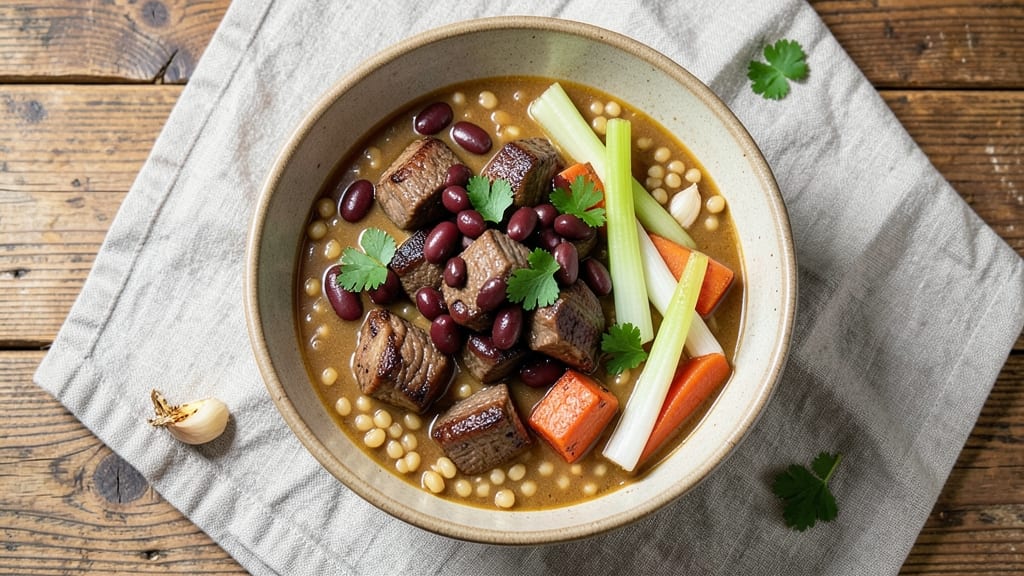
This beef barley and bean soup recipe transforms simple ingredients into a deeply satisfying bowl of comfort that simmers with earthy barley, hearty beans, and melt-in-your-mouth beef. The secret lies in slow simmering—allowing flavors to meld while the beef becomes fork-tender and the barley absorbs the rich, savory broth.
I’ve perfected this version over years of testing, ensuring every spoonful delivers that perfect balance of protein, fiber, and umami depth that makes it a weeknight staple and weekend centerpiece alike.
The beauty of this recipe is in its simplicity: no fancy techniques, just a well-seasoned broth that builds layers of flavor as it reduces. You’ll start with a browned beef base for depth, then let the vegetables and grains work their magic over 90 minutes of gentle simmering.
The barley softens just enough to hold its shape while soaking up the broth, and the beans add satisfying texture with every bite. It’s the kind of dish that tastes even better the next day, making it ideal for meal prep or feeding a crowd.
What you’ll end up with is a tender beef that falls apart at the touch of a spoon, barley with a satisfying bite, and beans that hold their shape without being mushy.
The broth is rich yet balanced—herbaceous from the thyme and bay leaf, slightly sweet from the carrots, and deeply savory from the beef. This is the kind of soup that warms you from the inside out, perfect for chilly evenings or when you need a nourishing meal without the fuss.
Whether you’re serving it with crusty bread to soak up every last drop or pairing it with a simple green salad for balance, this soup delivers restaurant-quality results at home. The best part?
It’s a recipe that improves with time, so you can make a big batch and enjoy it all week. Let’s get started on creating this hearty, flavorful masterpiece.
Ingredients for beef barley bean soup
Six hearty ingredients kick off this soul-warming beef barley and bean soup masterpiece.
| Ingredient | Amount | Notes |
|---|---|---|
| Chuck Roast 🥩 | 2 lb | Cut into 1-inch cubes |
| Yellow Onion 🧅 | 1 whole | Diced, medium size |
| Carrots 🥕 | 4 medium | Peeled, cut into chunks |
| Celery Stalks 🧅 | 3 medium | Diced, with leaves |
| Garlic Cloves 🧄 | 4 cloves | Minced, fresh preferred |
| Pearl Barley 🌾 | 1 cup | Rinsed well before cooking |
| Canned Kidney Beans 🫘 | 1 can | Drained and rinsed (15 oz) |
| Beef Broth 💧 | 6 cups | Low-sodium preferred |
| Tomato Paste 🍅 | 2 tbsp | Smooth, not chunky |
| Dried Thyme 🌿 | 1 tsp | Or 1 tbsp fresh |
| Bay Leaves 🌿 | 2 whole | Remove before serving |
| Salt 🧂 | 1 ½ tsp | Kosher or sea salt |
| Black Pepper 🌶️ | ½ tsp | Freshly ground |
| Olive Oil 🫒 | 2 tbsp | For browning beef |
The chuck roast is your flavor anchor—look for good marbling at the grocery store's butcher counter. Costco or Whole Foods usually carry the best cuts, but any supermarket's chuck roast works if it's fresh. Cutting it into 1-inch cubes ensures even cooking and that melt-in-your-mouth texture. For the veggies, don't peel the carrots if you're in a hurry—the skin adds color and nutrients. The celery leaves? Toss them in—they're packed with flavor. Pearl barley is the star here, but if you can't find it, wheat berries or farro work in a pinch.
No beef broth? Vegetable broth plus 1 tbsp soy sauce gets you close. Fresh thyme is ideal, but dried works at one-third the amount. Short on tomato paste? Crushed tomatoes at half the amount (about 1/2 cup) will do. The beans can be any variety—black beans or pinto both work beautifully. For extra depth, toast the barley 2 minutes in a dry pan before adding to the pot. This removes the raw taste and adds a nutty flavor that takes the soup to the next level.
This soup tastes even better the next day—make a double batch so you have leftovers. Store in the fridge for up to 5 days, or freeze portions for 3 months. I always keep a container in the freezer for those lazy weeknights. The barley thickens as it cools, so add a splash of broth when reheating. For serving, crusty bread and a sharp cheddar are my go-tos—perfect for soaking up every last drop of that rich, savory broth.
Why You'll Love This Recipe
- Chop Once, Simmer Twice: I swear by this trick—dice the onion, carrots, and celery together, then toss them straight into the pot. No measuring cups, no fuss. The chuck roast practically melts in, so even if you forget to sear it first, it still turns out tender. (I’ve done it. It’s fine.)
- Garlic-Kissed Umami Bomb: That slow-cooked chuck roast? It soaks up the garlic like a sponge, then breaks down into shreds of ridiculously rich beef. The barley adds chew, the beans bring heartiness, and the carrots sweeten just enough to balance the deep, savory notes. Honestly, I’ll take this over takeout any day.
- Lunchbox Hero: Between us, this soup is my meal prep MVP. Make a big batch on Sunday, and you’ve got lunch sorted for the week—just reheat and grab. The barley holds up perfectly, the beans stay tender, and the flavor only gets better the next day. (Yes, even on a Tuesday night.)
- Budget-Friendly Powerhouse: A chuck roast on sale? That’s my cue to stock up. This recipe stretches one into four hearty servings, and the barley and beans bulk it up without breaking the bank. I’ve made it for potlucks, sick days, and lazy Fridays—it’s that reliable. Plus, the veggies are the kind you can grab on sale and freeze.
Step-by-step instructions for beef barley and bean soup
This hearty soup delivers melt-in-your-mouth beef and chewy barley with every spoonful.
Brown the Chuck Roast for Deep Flavor
Heat a large Dutch oven over medium-high heat and add the 2 tablespoons olive oil. Working in batches if needed, add the 2 lb chuck roast cut into 1-inch cubes and brown on all sides. This step is crucial—it develops that rich, meaty flavor that carries through the entire soup. You'll know it's ready when the beef releases easily from the pan and develops a deep golden crust.
Once all the beef is browned, transfer it to a plate and set aside. Don't drain the browned bits—they're packed with flavor that will form the base of your soup. Here's where it gets fun: add the diced yellow onion, carrots, and celery stalks to the same pot, stirring to coat them in those delicious browned bits. Cook for 5-6 minutes until the vegetables begin to soften.
Build the Flavor Base with Aromatics
Add the 4 minced garlic cloves and cook for 30 seconds until fragrant. This is where the magic happens—the garlic should smell incredible but not burn. Stir in the 2 tablespoons tomato paste and cook for another 1 minute, allowing it to deepen in color and release its rich, umami flavor.
Now it's time for the spices: add the 1 teaspoon dried thyme, 1.5 teaspoons salt, and 0.5 teaspoon black pepper. Stir everything together and cook for 30 seconds to toast the spices slightly. This step ensures your soup has that perfect balance of seasoning throughout. The pot should smell like a warm, inviting kitchen—like you're about to enjoy a cozy meal.
Simmer the Soup Until Tender
Pour in the 6 cups beef broth and add the 2 whole bay leaves. Return the browned beef to the pot, along with any accumulated juices. Bring the mixture to a gentle boil, then reduce the heat to low and cover the pot. Let it simmer for 1 hour, stirring occasionally. This long simmer is what makes the beef tender and the flavors meld together beautifully.
After 1 hour, add the 1 cup rinsed pearl barley and the 1 can drained kidney beans. Stir gently to combine, then continue simmering for another 30-45 minutes, or until the barley is tender and the beef is fork-tender. You'll know the barley is ready when it's chewy but not hard—like a perfect bite of pasta. The soup should have a rich, hearty consistency, with the beef falling apart easily.
Finish and Serve with Perfect Texture
Remove the 2 bay leaves from the soup before serving. Taste and adjust the seasoning if needed—you might need a little more salt or pepper to balance the flavors. The soup should be rich and savory, with the barley and beans adding texture and heartiness to every spoonful.
Serve the soup hot, garnished with fresh parsley if you like. The contrast of the tender beef, chewy barley, and soft beans makes this soup incredibly satisfying. It's the kind of dish that tastes even better the next day, as the flavors continue to meld and deepen. Enjoy it with crusty bread to soak up every last drop of that delicious broth!
Pro Tips For Making Beef Barley Bean Soup
- Sear the Chuck First: Chuck roast is forgiving, but a 3-minute sear in a hot pot with oil—before adding liquid—builds flavor that simmering alone can’t match. I used to skip this and wondered why my soup tasted more like "beef broth with vegetables" than a rich, layered dish.
- Cut Celery into Half-Moons: No one wants to fish out giant celery stalks. Slice them into ½-inch half-moons so they cook evenly and disappear into the soup—no one will notice the extra 2 minutes of prep, but they’ll notice the texture.
- Don’t Overcrowd the Pot: Dumping everything in at once turns your soup into a sad, watery stew. Sear the beef first, then remove it before browning onions, carrots, and celery in batches. The Maillard reaction needs space to work its magic—crowding just makes it steam.
- Use Parboiled Barley: Raw barley takes forever to soften and can turn mushy. Rinse it first, then boil for 10 minutes before adding to the soup—it’ll cook through without gumminess. (Yes, even if the recipe says "add directly.")
Common mistakes when making this recipe
Skipping the Browning
Browning the beef is where all the deep, meaty flavor comes from—don't skip it! If you rush this step or use pre-cooked beef, your soup will taste bland and one-dimensional.
I've made this mistake, and the difference is night and day. The Maillard reaction creates complex flavors that no amount of seasoning can replicate later. 🔥
Adding Barley Too Early
Pearl barley needs time to absorb the broth and soften properly. Adding it too soon (like in the first hour) results in mushy, overcooked grains that lose their satisfying bite.
I learned this the hard way—wait until the beef has already tenderized before introducing the barley. Aim for that 30-45 minute window after the initial 1-hour simmer.
Ignoring the Bay Leaves
Those little bay leaves might seem insignificant, but they're flavor powerhouses! Forgetting to add them (or worse—leaving them in when serving) means missing out on that subtle herbal depth. I always double-check before serving to ensure they're removed. If you're worried about forgetting, add them to the pot early and
Overcrowding the Pot
Trying to cook everything at once in a small pot leads to steaming instead of browning. When you add the beef, work in batches if needed—don't just dump everything in. I use a 6-quart Dutch oven for this recipe, and it fits perfectly without overcrowding. If your pot is smaller, cook the beef in batches and set aside before adding vegetables.
Underseasoning the Broth
The broth is where the soup's soul lives, so don't be shy with the seasoning! Many home cooks hold back on salt, thinking they can add it later—but by then, the flavors are already set. Taste as you go and adjust gradually.
I always add the full 1.5 tsp salt during the initial seasoning, then taste again before serving. Remember, you can always add more salt, but you can't take it out!
Rushing the Simmer Time
This isn't a 30-minute soup—it needs that full 1.5-hour simmer to develop proper texture and depth. I've seen people cut corners by reducing the time, and the results are always disappointing.
The beef won't be tender, the barley will be undercooked, and the flavors won't meld properly. Patience is key here—trust the process and let it simmer! ✨
Nutrition facts
Frequently asked questions
Can I substitute pearl barley for another grain?
If you can't find pearl barley, try wheat berries or farro for a similar chewy texture. For a quicker option, bulgur wheat works but cooks faster—reduce the simmer time by 15-20 minutes. Just remember that different grains change the soup's consistency and flavor profile.
How do I make this soup vegetarian?
Swap the beef for mushrooms or lentils—both add hearty texture. Use vegetable broth instead of beef broth and add 1 tbsp soy sauce for depth. For umami richness, include 1 cup diced tomatoes or 2 tbsp miso paste when building the flavor base.
Can I make this soup in a slow cooker?
Yes! Brown the beef and veggies as directed, then transfer everything to a 6-quart slow cooker. Add the broth, barley, and beans, then cook on low for 6-7 hours or high for 3-4 hours. The slow cooker's gentle heat ensures tender beef and perfectly cooked barley without monitoring.
Why does my barley turn mushy?
Mushy barley usually means it cooked too long. Pearl barley needs 30-45 minutes of simmering after the beef tenderizes. If your soup is too thick, add ½ cup broth and simmer 5 more minutes. For extra texture, toast the barley in a dry pan for 2 minutes before adding to the pot.
What's the best way to reheat leftovers?
Reheat gently on the stove over low heat with a splash of broth to prevent drying. Avoid microwaving—it can make the barley rubbery. For extra richness, stir in 1 tbsp butter or olive oil while reheating. Leftovers taste even better the next day as flavors deepen!