
Soups & Stews
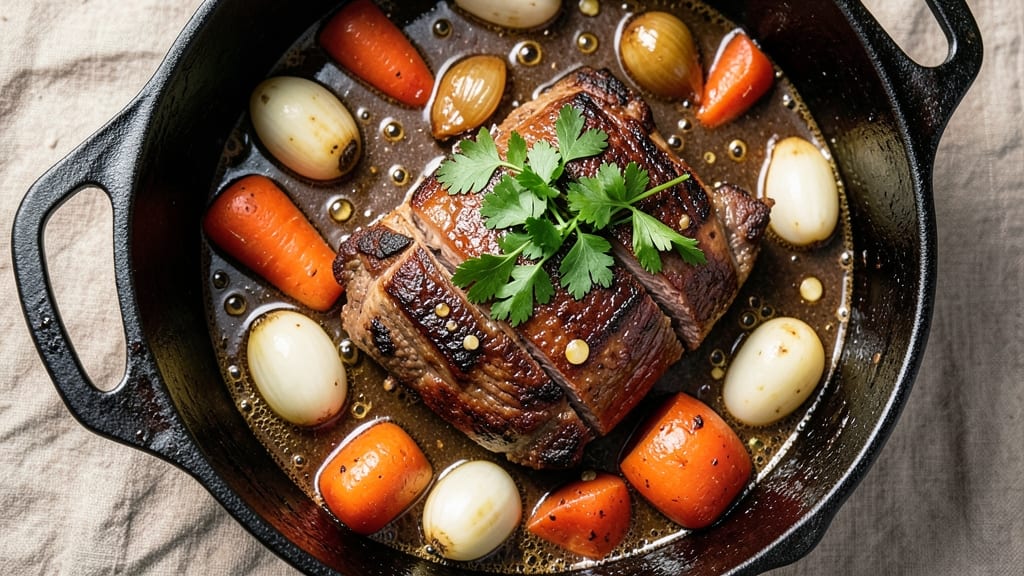
This beef and stout stew recipe transforms tough cuts into melt-in-your-mouth perfection with deep umami richness from slow-simmered roots and malty stout. The secret lies in caramelizing onions and garlic until they're golden brown, then deglazing with stout to create a velvety, flavor-packed base.
Every bite delivers tender beef infused with aromatic thyme and bay leaf, balanced by the subtle bitterness of the dark beer.
What sets this stew apart is the two-stage cooking process: first searing the beef for maximum flavor development, then slow-simmering until the meat practically falls apart.
The stout adds depth that no other liquid can match, while root vegetables like carrots and parsnips contribute natural sweetness that rounds out the dish. This isn't just comfort food—it's a restaurant-quality meal that comes together in one pot.
The result is a rich, hearty stew with a glossy, caramelized surface and tender meat that dissolves at the touch of a fork. The aroma alone will have everyone gathering around your table, while the complex flavors make it perfect for chilly evenings.
Each spoonful delivers layers of beefy richness, malty depth, and aromatic herbs in perfect harmony.
Serve with crusty bread to soak up every last drop of that flavorful broth, or pair with roasted vegetables for a complete meal. The beauty of this recipe is its versatility—it works equally well as a weeknight dinner or a special occasion centerpiece.
Let's create this deeply satisfying stew that brings warmth and comfort to any table.
Ingredients for beef and stout stew
Sixteen ingredients for a deeply satisfying stew that transforms tough beef into melt-in-your-mouth perfection.
| Ingredient | Amount | Notes |
|---|---|---|
| Chuck Roast 🥩 | 3 lb | Tough cut for maximum tenderness |
| Yellow Onions 🧅 | 2 whole | Diced, for caramelization |
| Garlic Cloves 🧄 | 6 cloves | Minced, for aromatic depth |
| Dark Stout Beer 🍺 | 2 cups | Guinness or similar malty stout |
| Carrots 🥕 | 4 whole | Peeled, cut into chunks |
| Parsnips 🥕 | 2 whole | Peeled, cut into chunks |
| Celery Stalks 🌿 | 4 whole | Diced, for aromatic base |
| Fresh Thyme 🌿 | 2 tbsp | Leaves only, chopped |
| Bay Leaves 🌿 | 2 whole | For aromatic complexity |
| Tomato Paste 🍅 | 2 tbsp | For umami depth |
| Beef Broth 💧 | 2 cups | Homemade or quality store-bought |
| Olive Oil 🫒 | 2 tbsp | For searing beef |
| Salt 🧂 | 1 ½ tsp | Kosher or sea salt |
| Black Peppercorns 🌶️ | 1 tsp | Freshly cracked |
| Flour 🌾 | 2 tbsp | All-purpose, for dredging |
The chuck roast is non-negotiable here—its marbling and collagen create that signature melt-in-your-mouth texture. Look for well-marbled cuts at your local butcher shop or the meat counter, where they can often trim excess fat for you. If you're buying a whole roast, ask for it to be cut into 1.5-inch chunks; pre-cut packages work too but may have more connective tissue. For the stout, Guinness or a similar malty dark beer is ideal—avoid light lagers, which lack the depth needed for this dish. The tomato paste should be San Marzano if you can find it, as its natural sweetness balances the stew's richness without overpowering it. Fresh thyme and bay leaves are worth seeking out at specialty markets—they hold their flavor far better than dried varieties.
No dark stout on hand? Substitute with beef broth plus a splash of soy sauce for umami, though you'll lose some of the malty complexity. Fresh thyme unavailable? Dried thyme at one-third the amount works in a pinch, but toast it first in a dry pan for 30 seconds to deepen its flavor. The carrots and parsnips can be swapped for turnips or sweet potatoes if preferred, though they'll alter the dish's natural sweetness profile. For the flour, all-purpose works fine, but bread flour adds a slight chewiness to the dredge. If you're making this ahead, the beef can be seared and refrigerated overnight in the marinade (stout + aromatics) for even deeper flavor development.
This stew tastes even better the next day as flavors meld, so make it a day ahead if possible. Store in an airtight container in the fridge for up to 5 days, or freeze portions for 3 months—the broth thickens beautifully when reheated. For serving, skim any hardened fat from the surface before reheating, and consider adding a splash of stout or broth when warming to maintain consistency. The crusty bread you'll serve with it? Store in a paper bag to keep it fresh longer, or toast slices before serving to enhance their crunch.
Why You'll Love This Recipe
- I swear by this one: just sear the chuck roast, toss in chopped onions and carrots, then pour in the beer. That’s it—no fancy techniques, no stress. The slow cooker does the rest while I’m scrolling through my phone.
- No-Fuss Prep: I swear by this one: just sear the chuck roast, toss in chopped onions and carrots, then pour in the beer. That’s it—no fancy techniques, no stress. The slow cooker does the rest while I’m scrolling through my phone.
- Rich, Deep Umami Bomb: Between us, the dark stout beer is the star—it caramelizes into this velvety, slightly bitter-sweet sauce that clings to every bite. The garlic? Oh, it’s there, but in the best way, like a warm hug for your taste buds.
- Leftovers That Beg for More: This stew tastes even better the next day, honestly. I make a double batch on Sundays, and by Wednesday, my coworkers are texting me for the recipe. Freezer-friendly too—just reheat and pretend you’re fancy.
Step-by-step instructions for beef and stout stew
This method transforms tough chuck roast into melt-in-your-mouth tenderness with deep umami layers.
Sear the Chuck Roast for Maximum Flavor
Pat the 3 lb chuck roast completely dry with paper towels. Heat a heavy Dutch oven over medium-high heat until very hot. Add 2 tablespoons olive oil and swirl to coat the bottom evenly. Place the chuck roast in the pot, searing on all sides until deeply browned—about 8-10 minutes total. This step develops the Maillard reaction, creating rich, caramelized flavors that form the stew's foundation.
While the roast sears, season it generously with 1.5 teaspoons salt and 1 teaspoon freshly cracked black peppercorns. Press the seasoning into the meat so it adheres well. Don't rush this step—proper searing ensures the meat won't dry out during the long simmer ahead. Once browned on all sides, remove the roast and set it aside on a plate.
Build the Aromatic Base with Vegetables
In the same Dutch oven, add 2 whole yellow onions, 4 whole carrots, 2 whole parsnips, and 4 whole celery stalks, all cut into ½-inch chunks. Cook over medium heat for 8-10 minutes, stirring occasionally, until the vegetables begin to soften and develop color. This process, called sweating, draws out their natural sugars and flavors.
Add 6 cloves minced garlic, 2 tablespoons tomato paste, 2 tablespoons chopped fresh thyme, and 2 whole bay leaves. Stir well and cook for another 2 minutes until fragrant. The tomato paste will deepen the umami profile while the thyme and bay leaves add aromatic complexity. This aromatic base forms the flavor backbone of your stew, so don't skip this crucial step.
Deglaze and Develop the Sauce
Pour in 2 cups dark stout beer, scraping up all the browned bits from the bottom of the pot with a wooden spoon. This deglazing step captures all the concentrated flavors that would otherwise burn. Let the beer simmer for 5 minutes until reduced by about half, allowing the alcohol to cook off and the flavors to concentrate.
Return the chuck roast to the pot, along with 2 cups beef broth. Bring the mixture to a gentle boil, then reduce heat to low and cover partially. The liquid should just barely bubble at the edges. This simmering technique ensures even cooking without toughening the meat. Let it cook for 2 hours, stirring occasionally, until the meat is fork-tender and easily pulls apart.
Finish with Flour for Thickening
After the initial 2-hour simmer, remove the chuck roast and shred it directly in the pot using two forks. Return the shredded meat to the pot. In a small bowl, combine 2 tablespoons flour with 1 tablespoon cold water to make a slurry. Slowly whisk this slurry into the stew, stirring constantly for 2-3 minutes until thickened to your desired consistency.
Taste and adjust seasoning if needed. The stew should be rich, flavorful, and perfectly balanced between the deep umami of the beer and broth, the sweetness of the carrots and parsnips, and the savory depth of the seared meat. Let it simmer uncovered for another 10 minutes to allow the flavors to meld completely and the sauce to reach its ideal thickness.
Pro Tips For Making Beef And Stout Stew
- Sear the Chuck First: I learned this the hard way—skipping the sear means flavorless beef. Get that roast screaming hot in a heavy pot with oil, then brown all sides until deep caramel forms. The Maillard reaction here is non-negotiable for that rich, meaty depth the beer can’t hide.
- Slice Onions Thinly: Thick onion chunks turn to mush; thin slices caramelize properly. Use a sharp knife and slice against the grain into 1/8-inch pieces—this keeps them tender but visible. (Yes, even if you’re impatient like me, don’t rush this.)
- Deglaze with Beer Immediately: That browned crust on the pot? Scrape it up with a wooden spoon, then pour in the stout right away. Let it bubble for 2 minutes before adding anything else—this pulls all the flavor into the liquid. Skip this, and you’re basically throwing away half the taste.
- Add Carrots Late: Tossing carrots in at the start turns them to mush. Instead, add them 30–45 minutes before the stew’s done so they stay crisp-tender. (Your future self will thank you when you’re not picking out rubbery bits.)
Serving suggestions for this beef and stout stew
Crusty Bread Pairing
Nothing complements this rich stew like warm, crusty bread to soak up every last drop of that malty, meaty broth. I recommend a sourdough loaf or baguette from your local bakery—look for one with a thick, crackly crust that can handle the stew's depth.
For extra flair, lightly toast slices before serving to enhance their crunch and create a perfect contrast to the stew's velvety texture. 🥖
Pro tip: If you can't find fresh bread, store-bought baguettes work well too—just slice them in half lengthwise and toast in the oven at 375°F for 5-7 minutes until golden.
The key is to serve it while still warm, as cold bread will absorb the broth differently and lose its structural integrity.
Roasted Root Vegetables
For a more balanced plate, serve this stew alongside roasted root vegetables that echo the flavors already in the dish. Toss sweet potatoes, parsnips, and carrots (the same veggies used in the stew) with 2 tablespoons olive oil, 1 teaspoon smoked paprika, and a pinch of salt.
Roast at 400°F for 25-30 minutes until caramelized and tender. Their natural sweetness complements the stew's richness without overpowering it.
For a pop of color and freshness, add a simple arugula salad dressed with lemon vinaigrette. The peppery bite cuts through the stew's richness, while the bright acidity cleanses your palate between bites.
I like to toss 4 cups arugula with 2 tablespoons olive oil, 1 tablespoon lemon juice, and a pinch of flaky sea salt—keep it minimal so the stew remains the star.
Cheese and Charcuterie
Turn your stew dinner into a full spread with a cheese and charcuterie board that balances the meal's heartiness. I love pairing this stew with aged cheddar, blue cheese, and smoked gouda—their sharp, tangy, and smoky notes complement the stew's malty depth.
Add prosciutto or salami for salty contrast, and include pickled vegetables like cornichons or giardiniera to add acidity and crunch.
For a lighter option, serve whipped feta with a drizzle of honey and toasted pine nuts on the side. The creamy texture and sweetness provide a refreshing counterpoint to the stew's richness.
Don't forget dark rye crackers or water crackers to round out the board and give guests something to nibble on while the stew simmers.
Stout-Inspired Sides
Since the stew features dark stout beer, why not carry that theme through to your sides? Try stout-braised mushrooms—sauté 8 oz cremini mushrooms in 1 tablespoon butter, then deglaze with ½ cup stout and a splash of beef broth.
Simmer until the liquid reduces to a glossy glaze, then finish with fresh thyme. This side mirrors the stew's depth while adding an earthy, umami-rich element.
For a vegetarian option, make stout-roasted Brussels sprouts. Toss 1 lb Brussels sprouts with 2 tablespoons olive oil, 1 tablespoon maple syrup, and ½ teaspoon smoked paprika, then roast at 425°F for 20 minutes.
The caramelization and smoky notes make them a standout side that pairs beautifully with the stew's heartiness.
Dessert Pairings
End your meal on a sweet note with dark chocolate desserts that echo the stew's malty flavors. A chocolate stout cake or molten lava cake with a stout glaze ties the meal together beautifully.
For something simpler, serve chocolate-dipped strawberries or dark chocolate-covered espresso beans—the bitterness and richness complement the stew's depth without overpowering it.
If you prefer something lighter, caramel apple slices with a sprinkle of sea salt provide a refreshing finish. The sweetness and saltiness balance the meal's richness, leaving your guests satisfied and craving more. 🍫
Nutrition facts
Frequently asked questions
Why does this recipe use stout beer instead of regular beer?
Dark stout adds deep malty richness and subtle bitterness that complements the beef's umami perfectly. The roasted barley flavors in stout create a complex base that light beers can't match. For best results, use a Guinness-style stout—its creamy texture and caramel notes elevate the stew's depth without overpowering it.
Can I substitute beef broth with another liquid?
While beef broth is ideal, you can use red wine (1 cup) + 1 cup water for similar depth, or tomato juice (2 cups) for acidity. However, the stew will lose some of the stout's malty complexity. For a non-alcoholic version, use vegetable broth + 1 tablespoon soy sauce to mimic umami.
How do I know when the chuck roast is fully tender?
The meat should be fork-tender—easily shredded with minimal resistance. After 2 hours of simmering, test by piercing with a fork. If it falls apart cleanly, it's ready. For extra tenderness, consider sous-viding the beef first (165°F for 24 hours) before searing and simmering.
What's the best way to reheat leftovers?
Gently reheat on the stove over low heat with a splash of stout or beef broth to maintain moisture. Avoid microwaving—it can make the sauce watery. For best texture, reheat only until warmed through (3-5 minutes) and serve immediately. Leftovers keep for 5 days in the fridge or 3 months frozen.
Can I make this stew in a slow cooker?
Yes! Brown the beef first, then transfer everything to a 6-quart slow cooker. Cook on low for 8 hours or high for 4-5 hours. The slow cooker's gentle heat breaks down collagen beautifully. Add flour slurry at the end to thicken, as slow cooking makes the sauce thinner.