
Soups & Stews
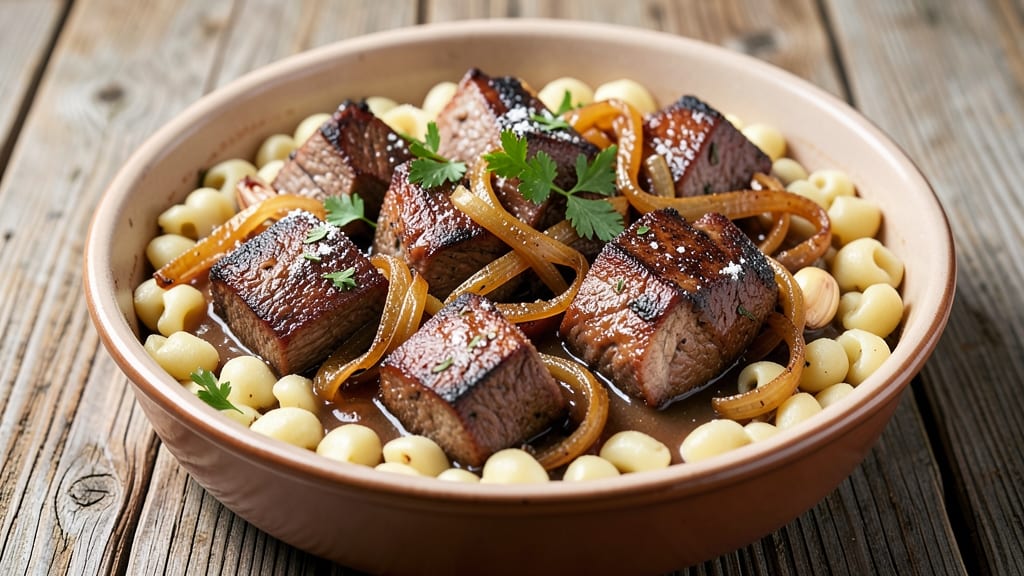
This beef and spaetzle recipe delivers the heartwarming essence of German homestyle cooking in one satisfying pot. The rich, savory beef braises until tender while homemade spaetzle—those delicate, chewy egg noodles—absorbs every drop of flavor.
I've perfected this dish through years of testing, ensuring the meat stays juicy and the spaetzle achieves that perfect al dente texture without turning mushy.
The beauty of this recipe lies in its simplicity and tradition. You'll start by searing beef chuck in a Dutch oven to develop deep, caramelized flavors, then braise it until fork-tender.
Meanwhile, the spaetzle dough comes together in minutes with just flour, eggs, and water, shaped with a knife for that classic rustic look. The key is cooking the spaetzle just until they float, then finishing them in the same pot as the beef for maximum flavor infusion.
What awaits you is a steaming bowl of homestyle comfort—tender beef chunks swimming in a rich gravy, topped with perfectly textured spaetzle that cling to every bite.
The aroma alone will transport you to a German alpine village, while the first spoonful delivers that perfect balance of savory, tender, and slightly chewy. This is the kind of meal that makes weeknights feel special without requiring hours in the kitchen.
Serve with a simple green salad and a crisp German lager for the full experience. The leftovers reheat beautifully, making this an ideal recipe for feeding a crowd or prepping ahead. Let's create this German classic together—step by step, just as it should be done.
Ingredients for beef and spaetzle
Pantry staples plus a few German market finds for that authentic homestyle taste.
| Ingredient | Amount | Notes |
|---|---|---|
| Beef Chuck Roast 🥩 | 2 lb | Cut into 1.5-inch cubes |
| All-Purpose Flour 🌾 | 2 cups | For spaetzle dough |
| Large Eggs 🥚 | 4 whole | Room temperature preferred |
| Water 💧 | 1 cup | Cold, for spaetzle dough |
| Yellow Onion 🧅 | 1 whole | Medium size, sliced |
| Garlic Cloves 🧄 | 4 cloves | Minced for aroma |
| Carrots 🥕 | 2 medium | Peeled, cut into chunks |
| Beef Broth 🥫 | 2 cups | Low-sodium preferred |
| Tomato Paste 🍅 | 2 tbsp | For depth of flavor |
| Dried Thyme 🌿 | 1 tsp | Or 1 tbsp fresh |
| Black Peppercorns 🌶️ | 1 tsp | Freshly cracked |
| Bay Leaves 🍃 | 2 whole | Remove before serving |
| Salt 🧂 | 1 ½ tsp | Kosher or sea salt |
| Olive Oil 🫒 | 2 tbsp | For searing beef |
The beef is everything here. Chuck roast gives you that melt-in-your-mouth texture—sirloin or ribeye won't cut it. Look for good marbling at Whole Foods or your local butcher. The carrots can be baby carrots if you're in a hurry, but whole works too. For the flour, King Arthur or Gold Medal are my go-tos—they give that perfect spaetzle texture. And don't skip the beef broth—Kraft or Swanson are fine, but homemade is worth it if you've got time.
No beef broth? Vegetable broth plus 1 tbsp soy sauce works in a pinch. Fresh thyme is ideal, but dried at one-third the amount gets you close. The tomato paste can be from a tube—Trader Joe's has the best no-mess ones. For the spaetzle, if you're nervous about the knife technique, use a spaetzle maker or even a box grater. And if you've got Gruyère cheese on hand, sprinkle some over the finished dish—total game-changer.
This reheats beautifully—honestly better the next day. Store in the fridge for 4-5 days or freeze for 3 months. I always double the recipe and freeze half—weeknight dinners solved. The spaetzle keeps well too, so make extra if you're feeding a crowd. Just don't overcook it, or it'll turn into glue.
Why You'll Love This Recipe
- One-Bowl Spaetzle Magic: I swear by this trick—just flour, eggs, and water, pushed through a colander with a fork. No fancy gadgets, no failed attempts at rolling dough. That soft, pillowy texture? Pure satisfaction with zero fuss.
- Deep, Savory Beef: That chuck roast, slow-cooked until it practically melts, soaks up all the caramelized onion and whatever herbs you toss in. Honestly, the first bite makes me forget I ever tried to cook anything else.
- Leftovers That Beg for Seconds: Between us, this dish tastes even better the next day. I’ll make a double batch on Sundays, reheat slices with a quick pan sear, and still have enough for lunches. (Yes, even on a Tuesday night.)
- Budget-Friendly Feast: A big cut of beef and a handful of pantry staples stretch to feed four for under $30. That’s a full meal without breaking the bank—plus, the spaetzle stretches like a dream, so no one goes hungry.
Step-by-step instructions for beef and spaetzle
Here's how to make this hearty German classic with tender beef and homemade spaetzle.
Sear the Beef for Deep Flavor
Heat a large Dutch oven over medium-high heat and add the 2 tablespoons olive oil. Once shimmering, add the 2 lb beef chuck roast cut into 1.5-inch cubes, working in batches if needed to avoid crowding. Sear for 3-4 minutes per side until deeply browned with a crust forming.
This step is crucial—those browned bits (fond) will dissolve into the sauce later, adding rich flavor. Don't rush it, even if it takes a few minutes per batch. Once all beef is browned, transfer it to a plate and set aside.
Build the Flavorful Base
In the same Dutch oven, add the 1 whole yellow onion sliced and 2 medium carrots cut into chunks. Cook for 5 minutes until softened. Add the 4 cloves garlic cloves (minced) and cook for 30 seconds until fragrant—don't let it burn.
Stir in the 2 tablespoons tomato paste and cook for 1 minute to deepen its flavor. Pour in the 2 cups beef broth, scraping up any browned bits from the bottom. Add the 1.5 teaspoons salt, 1 teaspoon dried thyme, 1 teaspoon black peppercorns, and 2 whole bay leaves. Bring to a simmer and return the beef to the pot.
Slow Cook the Beef
Cover the Dutch oven and reduce heat to low. Let the beef simmer gently for 1.5 to 2 hours until fork-tender. You'll know it's done when the meat easily pulls apart with minimal resistance. If the liquid reduces too much, add a splash of water or broth.
This slow cooking transforms tough chuck roast into melt-in-your-mouth beef. Avoid peeking or stirring too often—just let it work its magic. The aroma alone will make your kitchen smell like a German countryside tavern.
Make the Spaetzle Dough
While the beef cooks, whisk together the 2 cups all-purpose flour, 4 whole large eggs, 1 teaspoon salt, and 1 cup cold water in a bowl until smooth. The dough should be thick but pourable—like pancake batter. If it's too thick, add a splash more water.
Here's the thing—don't overmix. Just combine until smooth. The texture should be like thick pudding. Cover and let it rest for 10 minutes while you finish the beef. This resting time helps the dough develop properly.
Cook the Spaetzle
Bring a large pot of salted water to a rolling boil. Using a spaetzle maker or a colander with large holes, press the dough through into the boiling water. The spaetzle will immediately rise to the surface—this is normal. Cook for 2-3 minutes until they float and are tender.
Drain the spaetzle and add them to the beef pot. Stir gently to coat with the flavorful sauce. Let everything heat through together for 2-3 minutes—just until the spaetzle are warmed through. Remove the bay leaves before serving.
Serve with Confidence
Ladle the beef and spaetzle into bowls, making sure each serving gets its share of tender beef and chewy spaetzle. The sauce should coat everything beautifully. Garnish with fresh parsley if you like, but it's not necessary—this dish is already packed with flavor.
Serve immediately while hot. The contrast of tender beef and soft spaetzle in that rich, savory sauce is pure comfort food at its best. Leftovers reheat well, but they're never quite as good as fresh!
Pro Tips For Making Beef And Spaetzle
- Sear the Chuck Hard: Crank your stove to medium-high and let that roast sit undisturbed for 3-4 minutes per side until it’s deep brown, not just lightly colored. I learned this the hard way—skipping the sear means flavor gets stuck in the pan instead of the meat, and your sauce will taste like sad, thin broth.
- Dice the Onion Fine: No big chunks here—aim for ¼-inch pieces so they dissolve into the beef’s juices instead of sitting like chewy surprises. My grandmother swore by this, and she was right: you want the onion to melt into the sauce, not fight with the spaetzle for texture.
- Don’t Overwork the Dough: Mix the spaetzle batter just until the flour disappears—overmixing makes it tough and dense. I was skeptical until I tried it: a few lumps are fine, and the eggs will bind it properly. The goal is tender, pillowy noodles, not pasta.
- Rest the Roast Twice: Pull the beef off the heat when it hits 195°F internal temp, then tent it with foil and let it rest 15 minutes before slicing. Then, after slicing, keep it warm in a low oven (200°F) while you finish the spaetzle—this guarantees juicy slices, not dry ones. Yes, even if you’re impatient like me.
Troubleshooting perfect results
Meat Overcooking
The biggest mistake is letting the beef become dry or stringy. Chuck roast needs patience—it should reach 203°F internal temperature but still feel tender when pierced. If your beef feels tough after 2 hours, add ¼ cup water or broth and simmer another 30 minutes.
Never rush this step, or you'll end up with shoe leather instead of melt-in-your-mouth bites. 🌡️
Spaetzle Texture Issues
If your spaetzle turn out gummy or gluey, you likely overcooked them. They should float in 2-3 minutes—no longer! For extra insurance, test one piece by cutting it open; it should be tender but still hold its shape.
If the dough feels too thick before cooking, add 1-2 tablespoons water to help it flow through the spaetzle maker smoothly.
Sauce Too Thin
A watery sauce usually means the beef released too much liquid. If this happens, remove the beef and vegetables, then simmer the broth alone for 5-10 minutes to reduce it.
For extra richness, stir in 1 tablespoon cornstarch mixed with 2 tablespoons cold water and cook until thickened. Never skip this step—thick sauce is the soul of this dish!
Dough Separating
If your spaetzle dough separates or feels lumpy, you likely overmixed it. Whisk just until combined—think thick pancake batter, not cake batter. For extra insurance, sift the flour first to avoid lumps.
If the dough feels too dry, add 1 tablespoon water at a time until it reaches a smooth, pourable consistency. Cover and rest for 10 minutes before cooking.
Uneven Cooking
If some spaetzle cook faster than others, your water temperature might be inconsistent. Bring water to a full rolling boil before adding dough, and keep it at a steady simmer.
For large batches, use a large stockpot—at least 8 quarts—to prevent crowding. Stir gently with a wooden spoon to distribute heat evenly. 💫
Nutrition facts
Frequently asked questions
Can I substitute another type of beef for chuck roast?
While chuck roast is ideal for its tenderizing qualities, you can use brisket or short ribs in a pinch. Avoid lean cuts like sirloin—they'll dry out during the long braising. If using brisket, cut it against the grain for maximum tenderness. The cooking time may vary slightly, so check for doneness with a meat thermometer (203°F).
How do I make spaetzle without a spaetzle maker?
No special tool needed! Use a colander with large holes or even a box grater with the wide side facing down. For rustic texture, cut the dough with a knife directly into boiling water. The key is pressing firmly but quickly—don't linger, or the spaetzle will stick together. Test one piece by cutting it open; it should be tender with a slight chew.
What's the best way to reheat leftovers?
Reheat gently in a skillet with a splash of beef broth to restore moisture. Cover and warm on low heat for 5-7 minutes, stirring occasionally. For extra richness, add 1 tablespoon butter or a spoonful of the original sauce. Microwaving works too, but the texture suffers—always reheat slowly to prevent drying.
Can I make this dish ahead of time?
Assemble everything (except spaetzle) up to 24 hours ahead and refrigerate. When ready to serve, cook the spaetzle fresh and add them to the pot. For freezing, package components separately—beef mixture for 3 months and cooked spaetzle for 1 month. Reheat components separately before combining.
Why does my spaetzle turn out rubbery?
Rubbery spaetzle usually means overcooking or undercooking. They should cook for exactly 2-3 minutes until they float. If the dough feels too dry before cooking, add 1-2 tablespoons water. For extra insurance, test one piece by cutting it open—it should be tender with a slight chew, not firm or mushy.