
Soups & Stews
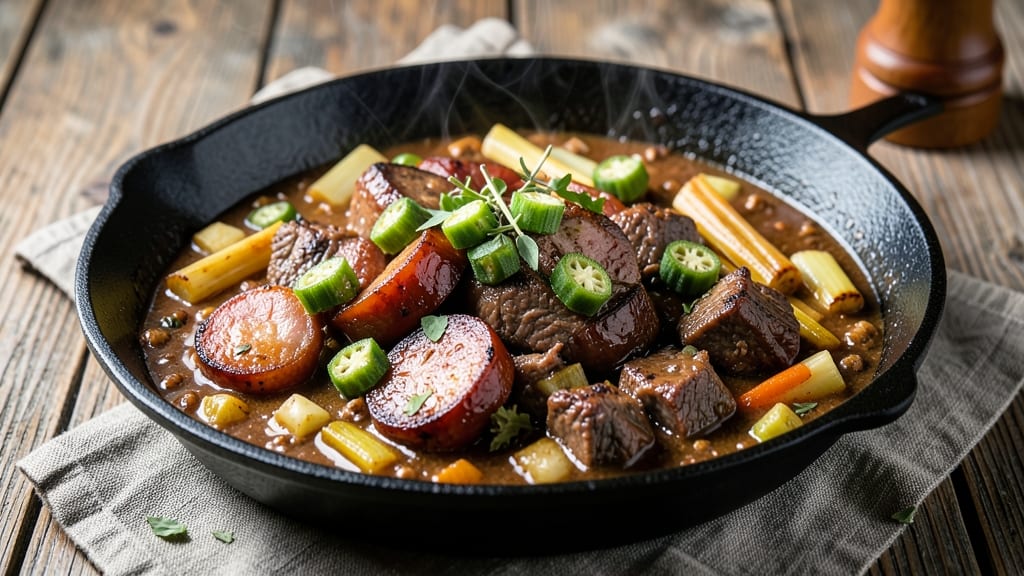
This beef and sausage gumbo recipe brings the soul of Louisiana to your kitchen with its rich, smoky depth and layers of Cajun flavor. The secret lies in the roux—a slow-cooked blend of fat and flour that forms the heart of every great gumbo, giving it that unmistakable dark, nutty aroma. I've perfected this version over years of testing, ensuring the perfect balance between tender beef, spicy sausage, and a velvety broth that's both hearty and comforting.
What sets this gumbo apart is the technique: browning the meats until deeply caramelized, then deglazing the pot to capture every last bit of flavor. The roux must be cooked to a dark mahogany color—never burnt—while stirring constantly to prevent burning.
This patience pays off in a stew that's rich, complex, and full of the kind of flavor that lingers long after the last spoonful. The key ingredients—smoked sausage, okra, and the holy trinity of onions, bell peppers, and celery—work together to create a dish that's both traditional and deeply satisfying.
By the time it's done simmering, you'll have a gumbo with tender beef and sausage swimming in a thick, flavorful broth that's perfect over steamed white rice. The okra adds a subtle thickness and a touch of Southern charm, while the spices—paprika, cayenne, and thyme—build layers of heat and warmth.
This is the kind of meal that brings people together, whether it's a weeknight dinner or a gathering with friends. The aroma alone will have everyone rushing to the table.
The beauty of gumbo is its versatility—it only gets better the next day as the flavors meld even more. Serve it with crusty bread to soak up every last drop of that rich, smoky broth. Let's get cooking and bring a taste of Louisiana to your kitchen.
Ingredients for beef and sausage gumbo
Pantry staples meet Cajun magic—smoky sausage, dark roux, and the holy trinity of flavors.
| Ingredient | Amount | Notes |
|---|---|---|
| Smoked Andouille Sausage 🌭 | 1 ½ lb | Remove casings, sliced into half-moons |
| Chuck Roast 🥩 | 2 lb | Cut into 1-inch cubes, trimmed of fat |
| Yellow Onion 🧅 | 2 whole | Diced, medium dice (1/4-inch) |
| Green Bell Pepper 🌶️ | 1 whole | Diced, medium dice (1/4-inch) |
| Celery Stalk 🥬 | 3 whole | Diced, medium dice (1/4-inch) |
| Fresh Okra 🌱 | 1 lb | Trimmed, cut into 1-inch pieces |
| Garlic Cloves 🧄 | 4 cloves | Minced, fresh preferred |
| Vegetable Oil 🫒 | ½ cup | For roux, high smoke point |
| All-Purpose Flour 🌾 | ½ cup | White flour for roux |
| Dried Thyme 🌿 | 1 tbsp | Or 3 tbsp fresh, chopped |
| Dried Oregano 🍃 | 1 tbsp | Mexican oregano preferred |
| Smoked Paprika 🌶️ | 2 tbsp | For deep smoky flavor |
| Ground Cayenne Pepper 🔥 | 1 tsp | Adjust for heat preference |
| Salt 🧂 | 2 tsp | Diamond Crystal preferred |
| Black Pepper 🌶️ | 1 tsp | Freshly ground preferred |
| Low-Sodium Chicken Broth 💧 | 4 cups | Homemade or quality store-bought |
| White Long-Grain Rice 🍚 | 2 cups | Uncooked, for serving |
The sausage and beef are the stars here. Andouille is non-negotiable for that smoky kick—Zatarain's or Johns are my go-tos, but any quality smoked sausage works. For the beef, chuck roast is key; it stays tender while soaking up all that roux flavor. Look for good marbling at Whole Foods or your local butcher shop. The holy trinity—onions, bell pepper, celery—should be fresh, crisp, and cut uniformly for even cooking. Okra? Grab the freshest you can find—the older it gets, the slimier it becomes when cooked. If you're using frozen, thaw and pat dry first.
No smoked paprika? Regular paprika plus a pinch of liquid smoke gets you close. Short on thyme? Dried oregano at double the amount works in a pinch. The roux is where the magic happens—if you burn it, start over. Need a shortcut? Pre-made roux from Trader Joe's is a lifesaver, but nothing beats making it fresh. The chicken broth? Homemade is ideal, but Swanson or Pacific Foods are solid store-bought options. Andouille casings too tough to remove? Ask your butcher to do it—they usually will for a small fee.
This gumbo tastes even better the next day—double the batch if you can. Store in the fridge for 4-5 days or freeze for up to 3 months. The roux thickens when cold, so stir it well before reheating. Serve over steamed rice—jasmine or basmati both work perfectly. For extra richness, save some roux to stir into the reheated gumbo. And trust me, everyone will ask for seconds—make extra rice too.
Why You'll Love This Recipe
- One-Pot Magic: I swear by this recipe because it’s literally one pot—no chopping boards, no extra pans, just the holy trinity (onion, bell pepper, celery) getting sautéed while you slice the sausage and chuck. My hands stay clean, and the house doesn’t smell like dinner for 10 minutes.
- Smoky Depth Bomb: That Andouille sausage? It’s the star—smoky, spicy, and melty all at once. Honestly, the first time I tasted it simmering with the beef, I nearly burned the kitchen. The chuck roast turns fork-tender while the sausage keeps things lively; it’s like a flavor hug in a bowl.
- Weeknight Crowd-Pleaser: This gumbo is my go-to for game days, lazy Sundays, or when friends drop by unannounced. It’s hearty enough for a football party but simple enough to make when I’m exhausted. (Yes, even on a Tuesday night.) Plus, it reheats like a dream—better the next day, if you ask me.
- Budget-Friendly Feast: A single chuck roast and a pack of Andouille stretch into days of meals. I’ll make a double batch, freeze half, and still have leftovers for lunch. Between us, this recipe saved me from takeout last month—and my wallet thanked me.
Step-by-step instructions for beef and sausage gumbo
Here's how to build a rich, smoky gumbo that balances heat and depth perfectly.
Build the Perfect Roux
Heat the 0.5 cup vegetable oil in a heavy Dutch oven over medium heat. Slowly whisk in the 0.5 cup all-purpose flour to create a smooth paste. This is your foundation—don't rush it.
Cook the roux for 20-25 minutes, stirring constantly with a wooden spoon, until it reaches a deep chocolate brown color. You're aiming for that perfect balance between nutty and slightly burnt—this gives gumbo its signature depth. If it gets too dark too quickly, reduce the heat slightly. The roux should smell toasty and rich before moving to the next step.
Sauté the Holy Trinity
Add the diced 2 whole yellow onion, 1 whole green bell pepper, and 3 whole celery stalk to the roux. Stir well to coat everything in that rich brown paste. Cook for 5-7 minutes until the vegetables soften and release their moisture.
Next, add the minced 4 cloves garlic and cook for another 30 seconds until fragrant—this prevents the garlic from burning, which would make the gumbo bitter. Here's where the flavor really starts to build. You'll notice the vegetables breaking down slightly, releasing their natural sweetness into the roux.
Brown the Meat and Add Spices
Push the vegetables to one side of the pot and add the 2 lb chuck roast cut into cubes. Brown the meat thoroughly on all sides for 8-10 minutes, working in batches if needed. This step develops deep meaty flavors that will infuse the gumbo.
Add the sliced 1.5 lb smoked andouille sausage and cook for another 3-4 minutes until lightly browned. Now stir in the 1 tbsp dried thyme, 1 tbsp dried oregano, 2 tbsp smoked paprika, 1 tsp ground cayenne pepper, 2 tsp salt, and 1 tsp black pepper. Give everything a good stir to distribute those spices evenly throughout the roux and meat.
Simmer the Gumbo
Pour in the 4 cups low-sodium chicken broth and bring the mixture to a gentle boil. Once boiling, reduce heat to low and let it simmer uncovered for 1.5 hours. This long cooking time allows all the flavors to meld together beautifully. Stir occasionally, but not constantly—you want those flavors to develop naturally.
After 1 hour, add the trimmed and cut 1 lb fresh okra. The okra will thicken the gumbo naturally as it cooks, creating that perfect velvety texture without needing additional thickeners. If you're worried about the gumbo getting too thick, you can add a splash of water later, but the okra usually does the job beautifully.
Cook the Rice and Serve
While the gumbo simmers, rinse the 2 cups white long-grain rice under cold water until the water runs clear. This removes excess starch that could make the rice mushy. In a separate pot, bring 4 cups water to a boil, add the rice, reduce heat to low, cover, and let it cook for 18-20 minutes or until tender.
To serve, ladle the gumbo over the rice, making sure each serving gets plenty of that rich, flavorful broth. The gumbo should be thick enough to coat the back of a spoon but still have a nice, smooth consistency. Serve hot with crusty bread to soak up every last drop of that smoky, spicy goodness.
Pro Tips For Making Beef And Sausage Gumbo
- CRANK THE HEAT FIRST: Don’t start slow with the roux—get that oil smoking hot (350°F or higher) before adding flour. I learned this the hard way after three batches of bland gumbo; a proper dark roux needs aggression from the get-go. Let it bubble like crazy for 5-7 minutes before adding the holy trinity.
- SWEAT, DON’T CHAR: When cooking the onion, bell pepper, and celery, keep the heat medium and cover the pot for the first 5 minutes. This releases moisture and softens them without turning them to mush—yes, even if it looks lazy. Uncovered later? Fine. But don’t skip this step or your gumbo will taste like sad office cafeteria stew.
- SLICE THE SAUSAGE THIN: Cut the Andouille into ¼-inch slices before browning, not chunks. Thinner pieces render fat faster and cook through evenly, so they don’t turn into chewy logs while the chuck roast stays tough. Trust me, your gumbo’s texture will thank you—no one wants a sausage surprise in every bite.
- REST THE CHUCK ROAST: Pull the chuck roast from the pot 10 minutes before serving and tent it with foil. I used to skip this, and the meat always dried out by the time everyone dug in. Let it reabsorb juices—it’ll stay tender, and you’ll avoid that sad, stringy texture that ruins a good gumbo. (Your future self will notice.)
Storing and reheating your leftovers
Refrigerator Storage
Let your gumbo cool completely before transferring to airtight containers—I use glass Pyrex with snap-on lids for best results. Store at 40°F or below for up to 4-5 days, though I find it tastes even better the next day as flavors meld.
The roux naturally thickens when cold, so give it a good stir before reheating. 💛
Freezer Storage
Gumbo freezes beautifully for up to 3 months without losing its rich, smoky character. Use quart-sized freezer bags or glass containers—leave 1 inch of headspace to prevent expansion cracks. Label with the date and thaw overnight in the fridge. I love making double batches for lazy weeknights! ❄️
Stovetop Reheating
My preferred method is stovetop because it preserves the gumbo's velvety texture. Transfer to a pot and heat over medium-low heat, stirring occasionally. Add 2-3 tablespoons of water or broth if it thickens too much.
Bring to a gentle simmer and cook for 10-15 minutes until heated through. Taste and adjust seasoning—it often needs a pinch more salt after reheating. 🔥
Microwave Method
For quick reheating, use microwave-safe glassware and cover loosely with a damp paper towel. Heat on medium power (50%) in 2-minute intervals, stirring between each, until reaching 165°F internal temperature.
Avoid high power—it can make the gumbo rubbery. Add a splash of water if needed to restore thickness. ✨
Thickening Tricks
If your reheated gumbo is too thin, stir in 1-2 tablespoons of reserved roux or mix 1 tablespoon cornstarch with 1 tablespoon cold water and whisk into the pot.
Simmer for 2-3 minutes until thickened. For extra richness, top with a dollop of sour cream or hot sauce before serving. 🌶️
Serving Suggestions
Serve over steamed jasmine rice and garnish with green onions or hot sauce for freshness and heat. The gumbo's depth pairs perfectly with crusty bread to soak up every last drop.
For a modern twist, add a sprinkle of crumbled feta or avocado slices on top. Trust me, everyone will ask for seconds! 🍚
Nutrition facts
Frequently asked questions about beef and sausage gumbo
Can I substitute andouille sausage for another type?
Andouille is ideal for its smoky flavor, but you can use kielbasa or smoked brisket in a pinch. For authenticity, look for Zatarain's or Johns brands. If using kielbasa, slice it thinner to mimic the texture of andouille. The smokiness is key to that Cajun soul!
How do I fix a burnt roux?
If your roux turns black, it's ruined—start over! The perfect gumbo roux should be dark mahogany, not burnt. For next time, reduce heat slightly and stir more frequently. A 1:1 oil-to-flour ratio is crucial—never skip this step. Patience is everything!
Can I make this gumbo in a slow cooker?
Brown the meat and make the roux in a skillet first, then transfer everything to a 6-quart slow cooker. Add broth and simmer on low for 6-8 hours or high for 3-4 hours. The slow cooking enhances the flavors beautifully. Just add okra in the last 30 minutes to prevent mushiness.
What's the best way to adjust the spice level?
Start with the 1 tsp cayenne called for, then taste and adjust. For more heat, add ½ tsp cayenne per serving or a dash of hot sauce at the end. If it's too mild, try red pepper flakes or a pinch of crushed red pepper. Always taste as you go!
Can I make this gumbo without okra?
Yes! If you dislike okra, thicken with 1 tablespoon cornstarch mixed with 1 tablespoon cold water and stir in during the last 10 minutes of simmering. For extra richness, add ½ cup tomato paste with the broth. The gumbo will still be delicious—just slightly less traditional.