
Soups & Stews
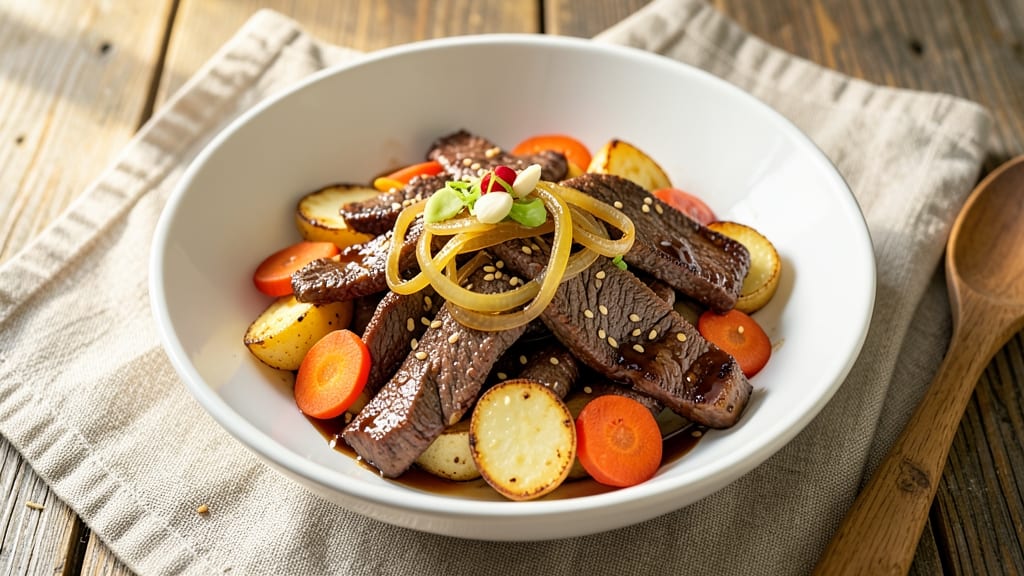
This beef and potato stir fry recipe delivers restaurant-quality wok-fired crunch with tender beef and perfectly caramelized potatoes in under 30 minutes. The secret lies in high-heat searing and a silky soy-ginger sauce that balances sweet, savory, and umami notes—no takeout required.
I've refined this technique over years of testing, ensuring every bite has that satisfying bite and velvety texture you crave after a long day.
What sets this stir-fry apart is the two-stage cooking process: first searing the beef to lock in juices, then stir-frying with potatoes until golden and crisp at the edges. The sauce, made with just five pantry staples, coats everything evenly without making it soggy.
It's the kind of meal that transforms simple ingredients into something hearty and restaurant-worthy, all while keeping prep straightforward.
By the time you're done, you'll have a plate of silky beef, caramelized potatoes, and aromatic vegetables all bathed in that glossy, flavor-packed sauce. The high heat creates a satisfying crunch while keeping the beef tender, and the sauce ties everything together with its perfect balance of sweetness and depth.
This is comfort food at its best—quick, satisfying, and packed with flavor.
Serve it over steamed rice or noodles to soak up every last drop of that delicious sauce. The recipe scales easily for a crowd, and leftovers reheat beautifully. Let's get cooking—your taste buds will thank you.
Ingredients for beef and potato stir fry
Restaurant-quality wok-fired crunch meets silky soy-ginger sauce with these 15 simple ingredients.
| Ingredient | Amount | Notes |
|---|---|---|
| Flank Steak 🥩 | 1 lb | Thinly sliced against grain |
| Yellow Onions 🧅 | 1 whole | Thinly sliced, about 1 cup |
| Russet Potatoes 🥔 | 1 ½ lb | Cut into 1-inch cubes |
| Carrots 🥕 | 3 whole | Julienned into matchsticks |
| Garlic Cloves 🧄 | 6 cloves | Minced, about 1 tbsp |
| Fresh Ginger 🌿 | 2 tbsp | Grated, peeled |
| Low-Sodium Soy Sauce 🍶 | ½ cup | Plus 1 tbsp for marinade |
| Sesame Oil 🫒 | 1 tbsp | Toasted sesame oil |
| Honey 🍯 | 2 tbsp | Pure clover honey |
| Rice Vinegar 🍶 | 2 tbsp | White rice vinegar |
| Vegetable Oil 🫒 | 3 tbsp | High smoke point |
| Salt 🧂 | 1 ½ tsp | Diamond Crystal kosher |
| Black Pepper 🌶️ | ½ tsp | Freshly cracked |
| Green Onions 🧅 | 3 whole | Thinly sliced, white parts |
| Toasted Sesame Seeds 🌱 | 1 tbsp | For garnish |
The beef is non-negotiable here—flank steak gives you that perfect chew and tender texture when sliced thinly against the grain. Costco or your local butcher section will have it pre-sliced for convenience, but if you're slicing yourself, a sharp knife and steady hand are key. For the potatoes, Russets are ideal because they hold their shape during stir-frying. I always buy organic if possible—they're less likely to have that waxy coating that can interfere with browning. The ginger should be fresh, not paste; Trader Joe's sells pre-peeled chunks which save time. And for the soy sauce, Kikkoman low-sodium is my go-to, but any good-quality brand works.
No flank steak? Sirloin or ribeye sliced thinly will work, but avoid chuck—it's too tough for stir-frying. Subbing for the potatoes? Sweet potatoes or jicama add a different texture but still caramelize beautifully. The ginger paste is a lifesaver if you're in a pinch, though fresh has more punch. For the sauce, if you can't find toasted sesame oil, regular sesame oil plus a pinch of smoked paprika mimics that nutty depth. And if you're watching sugar, reduce the honey to 1 tbsp and add an extra 1/2 tbsp of rice vinegar for brightness. The green onions can be swapped for scallions or chives if that's what you have on hand.
This stir-fry reheats beautifully—just toss with a splash of water or broth to keep it moist. Store leftovers in an airtight container for up to 4 days in the fridge, or freeze for 3 months by portioning into meal-sized containers. For meal prep, I like to cook the beef and potatoes separately, then combine with the sauce when reheating. The sauce itself keeps in the fridge for 1 week if you make extra, though it's best used fresh. And if you're serving a crowd, double the sauce ingredients—it disappears fast!
Why You'll Love This Recipe
- One-Pan Magic: I swear by this recipe when I’m too tired to scrub a million dishes—just toss the potatoes, onions, and carrots in one pan, sear the flank steak separately, then throw everything together. The potatoes caramelize right alongside the beef, and honestly? One sheet pan, one spatula, done.
- Garlic-Crusted Crunch: That crispy edge on the potatoes? It’s the secret weapon. I slice them thin, let them sizzle until golden, and then finish with minced garlic that clings to every bite. The beef stays tender but develops this perfect sear—like a steakhouse bite at home.
- Leftover Reinvention: Between us, this stir fry is my meal prep best friend. Make a double batch, and I’ve got lunch for days—pack it cold for sandwiches or reheat it for a hearty dinner. The flavors only get better the next day, especially if you toss in a little soy sauce or sesame oil.
- Budget-Friendly Feast: Flank steak stretches farther than you’d think when sliced thin, and potatoes? They’re the ultimate budget hero. I’ll often swap in frozen veggies if fresh ones are pricey, and the dish still feels like a special night in. Plus, it feeds four for less than takeout.
Step-by-step instructions for wok-fired beef and potato stir fry
Here's how to transform simple ingredients into a restaurant-worthy stir fry with perfect texture contrast.
Marinate and Prep the Flank Steak
Slice the 1 lb flank steak thinly against the grain into ¼-inch strips—this ensures tender bites. In a bowl, combine 1 tablespoon low-sodium soy sauce (reserved from the ½ cup total), 1 tablespoon rice vinegar, and ½ teaspoon black pepper. Add the steak strips and toss to coat evenly. Let it marinate for 15-20 minutes at room temperature while you prep the vegetables.
This short marinade tenderizes the beef and adds subtle acidity that brightens the rich soy flavors. The flank steak's lean cut benefits from quick cooking, so don't over-marinate or it'll become mushy. Pat the strips dry with paper towels before cooking to ensure maximum sear.
Par-Cook the Potatoes for Crunchy Texture
Cut the 1.5 lb russet potatoes into 1-inch cubes and place them in a cold pot of water. Bring to a boil, then immediately reduce to a simmer for 8-10 minutes until they're fork-tender but still holding their shape. Drain well and set aside. This partial cooking prevents them from turning to mush during stir-frying while developing that satisfying bite.
Don't skip this step—raw potatoes release too much starch and create a gluey mess. The slight pre-cook also helps them absorb the sauce better later. Pat them dry thoroughly after draining, as any moisture will steam the vegetables instead of searing them.
Build the Stir-Fry Base with Aromatics
Heat 2 tablespoons vegetable oil in a wok or large skillet over high heat until shimmering. Add the thinly sliced yellow onions and stir-fry for 2 minutes until softened but not browned. Add the julienned carrots and cook for another 2 minutes, stirring constantly. This layered cooking prevents burning while developing sweet caramelized flavors.
Next, add the minced garlic cloves and grated fresh ginger, stirring for 30 seconds until fragrant. The garlic should sizzle audibly—if it burns, you're cooking too hot. Immediately add the par-cooked potatoes and stir-fry for 3 minutes until they begin to brown in spots. This creates that coveted wok hei (breath of the wok) flavor.
Cook the Beef and Finish with Sauce
Push the vegetables to one side of the wok and add the remaining 1 tablespoon vegetable oil. Add the marinated steak strips in a single layer and sear undisturbed for 1-2 minutes until browned on one side. Stir and cook for another 1-2 minutes until fully cooked through. Remove the beef and set aside temporarily.
To the wok, add the ½ cup low-sodium soy sauce, 2 tablespoons honey, 1 tablespoon toasted sesame oil, and 1 teaspoon salt. Stir for 1 minute until the sauce slightly thickens. Return the beef and potatoes to the wok, tossing everything together for 2 minutes until evenly coated and heated through. The sauce should cling to the ingredients without being overly glossy.
Garnish and Serve Immediately
Transfer the stir fry to serving plates and garnish with thinly sliced green onions and 1 tablespoon toasted sesame seeds. Serve immediately while the potatoes are still slightly crisp and the sauce maintains its silky sheen. The contrast of tender beef, crisp potatoes, and sweet carrots creates an irresistible bite in every spoonful.
This dish tastes best right out of the wok, so don't let it sit. The residual heat continues to cook the ingredients, which can make them softer. If making ahead, cook the components separately and assemble just before serving to maintain that perfect texture contrast we worked so hard to achieve.
Pro Tips For Making Beef And Potato Stir Fry
- CUT POTATOES LARGE: Russets break down fast—aim for 1.5-inch chunks, not tiny dice. I learned this the hard way when my stir-fry turned into a mushy mess. Big pieces hold shape better and soak up flavors without falling apart.
- SALT STEAK BEFORE SEARING: Season flank steak generously with salt and let it sit 10 minutes before hitting the pan. This guarantees flavor penetration instead of a bland crust. (Yes, even if you’re impatient like me.)
- STIR-FRY IN BATCHES: Don’t crowd the pan—cook onions and carrots first, then move them aside before adding potatoes. Overloading steams instead of sears, and that’s how you end up with soggy veggies.
- USE COLD POTATOES: Toss raw potato chunks in ice water for 5 minutes before cooking. The cold start prevents them from turning to mush in the hot pan—trust me, your stir-fry will thank you.
Storing and reheating your beef and potato stir fry
Fridge Storage Tips
Store your stir-fry in an airtight container with a tight-fitting lid to keep flavors fresh and prevent drying. I recommend glass Pyrex containers—they distribute heat evenly when reheating. Let the dish cool to room temperature for no more than 2 hours before refrigerating to avoid bacterial growth.
The stir-fry stays delicious for 4 days in the fridge, with the potatoes maintaining their slight crunch when handled properly. 🥬
Freezer-Friendly Prep
For long-term storage, portion the stir-fry into single-serving meal-sized containers to reheat only what you need. Freeze for up to 3 months—the sauce remains vibrant, though the potatoes may soften slightly. I like to freeze the beef and sauce separately from the potatoes to preserve texture.
Use freezer-safe Ziploc bags with all air squeezed out to prevent freezer burn. Label with the date to track freshness. ❄️
Stovetop Reheating
My preferred method is stovetop reheating over medium heat with a splash of water or low-sodium soy sauce to restore moisture. Add 1 tablespoon liquid per serving and stir frequently for 3-5 minutes until heated through.
This prevents the sauce from drying out and keeps the potatoes from becoming gummy. For extra crispiness, sear the potatoes in a dry pan for 1 minute after reheating. 🔥
Microwave Reheating
For quick meals, cover the stir-fry with a damp paper towel and microwave on 50% power for 1-2 minutes, stirring halfway. Avoid full power to prevent rubbery textures. If the sauce looks thick, add 1 teaspoon water and stir.
This method works best for the beef and sauce—reheat potatoes separately in a dry pan for better texture. 🍲
Meal Prep Strategy
Prep ahead by cooking the beef and sauce separately from the potatoes. Store them in separate containers in the fridge. When ready to eat, stir-fry the potatoes fresh in a pan for 3-4 minutes until crispy, then mix everything together.
This keeps the potatoes from absorbing too much moisture during storage. Double the sauce recipe—it reheats beautifully and adds depth to leftovers. 📅
Nutrition facts
Frequently asked questions
Can I substitute sweet potatoes for regular potatoes?
Yes, you can! Sweet potatoes will add natural sweetness and a slightly softer texture. For best results, cut them into ½-inch cubes (smaller than regular potatoes) and reduce the honey in the sauce to 1 tablespoon to balance flavors. They'll take about 2 minutes longer to par-cook since they're denser.
What's the best way to slice flank steak for stir-fry?
Slice the steak ¼-inch thick against the grain into ¼-inch wide strips. Use a sharp knife and secure the meat with twine to prevent rolling. For even cooking, freeze the strips for 15 minutes before slicing—the cold temperature makes them easier to cut uniformly.
Can I make this stir-fry in a regular skillet?
While a wok gives the best heat distribution, a 12-inch cast iron skillet or nonstick pan works perfectly. Just use high heat and work in batches if needed. The key is maintaining that high temperature to get proper browning—don't crowd the pan or the ingredients will steam instead of sear.
Why do my potatoes turn mushy? This usually happens from either overcooking or not patting them dry enough after par-cooking.
Can I make this gluten-free?
Yes! Simply replace the soy sauce with tamari or coconut aminos (use ⅓ cup since they're saltier). For extra umami, add 1 teaspoon gluten-free fish sauce to the sauce mixture. All other ingredients are naturally gluten-free in this recipe.