
Soups & Stews
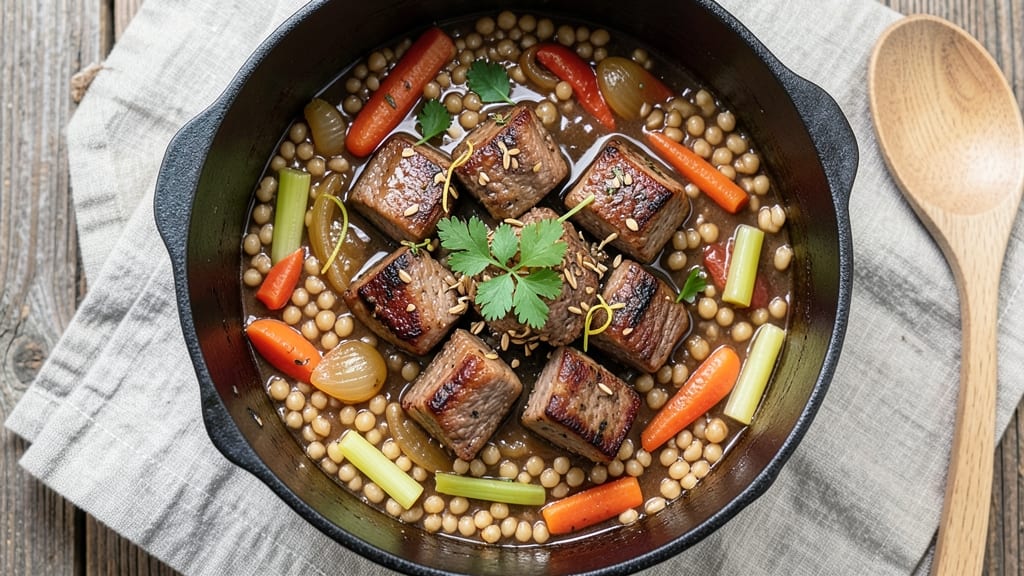
This beef and barley stew recipe transforms tough cuts of beef into melt-in-your-mouth tenderness through the magic of slow simmering on the stovetop. The secret lies in layering flavors—deep caramelized onions, rich beef broth, and chewy barley—all working together over hours to create a hearty, comforting dish that tastes even better the next day. I developed this version after years of testing, ensuring it delivers restaurant-quality depth without requiring fancy equipment.
The beauty of this recipe is its simplicity: just one pot, minimal prep, and a hands-off cooking process that lets flavors meld naturally. You'll start with a deep brown sear of beef and vegetables, which builds a flavorful crust that dissolves into the broth as it simmers.
The barley absorbs all that rich liquid, becoming tender and nutty while adding texture that balances the stew's creaminess.
By the time you serve it, you'll have a steaming bowl of stew with perfectly tender beef, hearty barley, and vegetables that have softened just enough to release their sweetness.
The aroma alone will have everyone gathering at the table, and each spoonful delivers that satisfying combination of meaty richness and comforting warmth. This is the kind of meal that feels like a hug in food form.
Whether you're feeding a family or meal prepping for the week, this stew scales beautifully and tastes even better reheated. The techniques here work for both traditional stovetop methods and modern adaptations like pressure cookers—giving you flexibility without sacrificing flavor. Let's get started on creating this comforting classic.
Ingredients for beef and barley stew recipe stove top
One pot, deep flavors, and hours of simmering transform tough beef into restaurant-quality comfort.
| Ingredient | Amount | Notes |
|---|---|---|
| Chuck Roast 🥩 | 2 ½ lb | Cut into 1-inch cubes, trimmed of fat |
| Yellow Onions 🧅 | 2 whole | Thinly sliced, about 4 cups |
| Carrots 🥕 | 4 whole | Peeled, cut into 1-inch chunks |
| Celery Stalks 🌿 | 4 whole | Cut into 1-inch pieces |
| Pearl Barley 🌾 | 1 cup | Uncooked, rinsed thoroughly |
| Garlic Cloves 🧄 | 4 cloves | Minced, about 1 tbsp |
| Tomato Paste 🍅 | 2 tbsp | Smooth, not chunky |
| Dry Red Wine 🍷 | 1 cup | Bold variety like Cabernet |
| Beef Broth 💧 | 4 cups | Low-sodium preferred |
| Bay Leaves 🌿 | 2 whole | Fresh if possible |
| Thyme Sprigs 🌿 | 4 whole | Or 1 tsp dried thyme |
| Salt 🧂 | 1 ½ tsp | Diamond Crystal preferred |
| Black Peppercorns 🌶️ | 1 tsp | Freshly cracked |
| Olive Oil 🫒 | 2 tbsp | Extra-virgin for searing |
| Flour 🌾 | 2 tbsp | All-purpose for dredging |
The chuck roast is your flavor anchor here—look for good marbling at the butcher counter, which guarantees tender results. Costco or local meat markets usually carry it pre-cut, but if buying whole, ask for a 2-3 pound roast to cube yourself. The onions, carrots, and celery form your flavor base, so don't skimp on freshness. Walmart's Great Value line is surprisingly good for this trio, but farmers markets have unbeatable quality. For the barley, Bob's Red Mill is my go-to brand—it cooks evenly and holds its shape. Fresh thyme and bay leaves make all the difference, so grab them from the grocery store's produce section if they're not already in your spice rack.
No red wine? Substitute beef broth with 1 tbsp balsamic vinegar for depth. Short on thyme? Dried works at one-third the amount, but fresh is ideal. The tomato paste can be skipped if you're not a fan, but it adds that umami punch—Rao's or Muir Glen are reliable brands. For the flour dredge, King Arthur or Gold Medal work perfectly. If you're using a pressure cooker, reduce the broth by 1 cup since the barley will absorb less liquid under pressure. The carrots can be baby carrots if that's what's in your fridge, but whole carrots develop better flavor as they simmer.
This stew tastes even better the next day—plan ahead. Store in an airtight container for up to 5 days in the fridge, or freeze portions for 3 months. I always make a double batch because it reheats beautifully for lunches. For serving, keep the barley slightly undercooked if you prefer it chewy—it continues to absorb liquid as it sits. The fat will rise to the top when chilled, so skim it off before reheating for a cleaner texture. Leftovers make fantastic sandwiches with crusty bread the next day.
Why You'll Love This Recipe
- One-Pot Magic: I swear by this—just dump everything in one pot and walk away. No fancy techniques here: brown the chuck roast, toss in the onions, carrots, and celery (the classic "holy trinity" of stews), add barley, and let it simmer. The barley thickens the broth just enough without needing flour or cornstarch.
- Rich Without Effort: Honestly, the flavor builds itself. The chuck roast gets so tender it falls apart at the spoon’s touch, while the barley soaks up all the savory juices—no heavy cream or fancy garnishes needed. That deep, meaty aroma? Pure reward for doing almost nothing.
- Leftovers That Save Me: This stew only gets better after day two. I make a double batch on Sundays, and by Wednesday, it’s my go-to for quick lunches. The barley stays firm enough to eat cold in sandwiches, and the beef? Still melts in your mouth.
- Budget-Friendly Feast: Between us, this is my secret weapon for stretching a chuck roast into five meals. Barley’s cheap, veggies are cheap, and you’re not buying pre-made broth or gourmet cuts. Plus, the leftovers freeze like a dream—no sad, dried-out stew here.
Step-by-step instructions for beef and barley stew
Here's how to create a rich, hearty stew that simmers to perfection on the stovetop.
Sear the Chuck Roast for Deep Flavor
Heat the 2 tablespoons olive oil in a large Dutch oven or heavy pot over medium-high heat until shimmering. Pat the 2.5 lb chuck roast dry with paper towels—this ensures a proper sear. Working in batches if needed, add the beef cubes and sear for 3-4 minutes per side until deeply browned and caramelized. You want that beautiful crust that holds all the flavor.
As the beef browns, remove it from the pot and set aside. If the oil starts smoking excessively, reduce the heat slightly. This step builds the foundation for your stew's rich taste—don't skip it. The browned bits (fond) will later dissolve into the sauce, creating complex layers of flavor.
Build the Aromatic Base
In the same pot, add the 2 tablespoons flour and stir vigorously for 30 seconds to coat the browned bits. This creates a roux that will thicken your stew. Add the 2 whole yellow onions, 4 whole carrots, and 4 whole celery stalks, stirring to coat everything in the flour mixture.
Cook for 5 minutes over medium heat, stirring occasionally, until the vegetables begin to soften. Add the 4 cloves minced garlic and cook for another 30 seconds until fragrant. Here's where the flavors start to meld—you'll smell the onions caramelizing and the garlic releasing its aroma. This aromatic base forms the heart of your stew's flavor profile.
Deglaze and Simmer the Stew
Pour in the 1 cup dry red wine, scraping up any browned bits from the bottom of the pot with a wooden spoon. Let it simmer for 3-4 minutes until reduced by half. Add the 2 tablespoons tomato paste, 4 cups beef broth, 2 whole bay leaves, and 4 whole thyme sprigs, then return the beef to the pot.
Bring to a gentle boil, then reduce heat to low and cover partially. Let it simmer for 1 hour, stirring occasionally. This initial simmer breaks down the tough beef fibers and infuses the broth with flavor. You'll notice the beef becoming more tender as it cooks—this is when the magic happens in the pot.
Add Barley and Complete the Cooking
After the initial 1 hour, add the 1 cup rinsed pearl barley and the 1.5 teaspoons salt and 1 teaspoon black peppercorns. Stir gently to distribute the barley evenly. Return to a simmer and cook uncovered for another 45-60 minutes, stirring occasionally, until the barley is tender and the stew has thickened to your desired consistency.
The barley should absorb the liquid and become plump and tender. If the stew becomes too thick, add a splash of water or broth. The stew is done when the barley is fully cooked and the beef is fork-tender. Taste and adjust seasoning if needed—this is your chance to perfect the balance of flavors.
Rest and Serve with Confidence
Remove the stew from heat and let it rest for 10-15 minutes. This resting period allows the flavors to meld and the barley to fully absorb the liquid. Remove and discard the bay leaves and thyme sprigs before serving. Ladle the stew into bowls, ensuring each serving gets a generous portion of barley and tender beef.
Serve immediately with crusty bread or over mashed potatoes to soak up every last bit of that rich, savory broth. The result should be a hearty stew where each bite delivers tender beef, chewy barley, and a deep, complex broth that's perfect for chilly days. This is comfort food at its finest—simple ingredients transformed into something extraordinary through patience and technique.
Pro Tips For Making Beef And Barley Stew Recipe Stove Top
- SEAR THE ROAST FIRST: High heat. Seriously, crank it up to medium-high and let that chuck roast develop a deep brown crust in a heavy pot—about 5-6 minutes per side. I learned this the hard way: skipping the sear means flavor that’s more "meaty" than "rich and caramelized." Use a tablespoon of oil, not butter (it burns too fast), and don’t overcrowd the pot—work in batches if needed.
- CUT VEGETABLES UNIFORM: No, "chopped" isn’t specific enough. Aim for ½-inch dice on onions, carrots, and celery—consistent size means even cooking and no mushy bits. I used to eyeball it, but now I measure with my knife: slice onions into 6 equal wedges first, then quarter them. Pearl barley stays firm when paired with evenly sized veggies, and the stew won’t turn into a soup.
- STIR THE BARLEY: Don’t just dump it in and walk away. After adding barley to the simmering stew, give it a quick stir to break up any clumps—especially if you’re using uncooked barley. I’ve seen barley form a pasty mess when left to its own devices, and no one wants that. A 30-second stir ensures even absorption and prevents gummy texture. (Yes, even if you’re impatient like me.)
- SIMMER LOW AND COVERED: This isn’t the time to rush. Once the liquid reaches a gentle bubble, drop the heat to low, cover the pot, and let it do its thing for at least 2.5 hours—3 if your roast is thick. I used to crank the heat higher to speed it up, but that just turns the barley mushy and the beef dry. The lid traps steam, and low heat melts collagen into flavor. Check occasionally, but resist the urge to peek too often.
Common mistakes when making this recipe
Skipping the Sear
I can't stress enough how crucial that initial sear is—it's what builds the deep, rich flavor in your stew. If you skip it or rush through, you'll end up with beef that's tough and broth that's bland.
Take your time with 3-4 minutes per side until you get that beautiful caramelized crust. The browned bits (fond) dissolve into the sauce during simmering, creating layers of flavor you simply can't replicate any other way. 🔥
Using Too Much Liquid
Barley absorbs liquid differently than rice, and too much water will leave you with mushy grains instead of chewy, satisfying bites. Start with 4 cups of broth and adjust as needed—if the stew gets too thin, reduce by 15 minutes uncovered to thicken naturally.
I've seen people double the liquid, only to end up with a soup-like consistency that lacks the hearty texture we want.
Not Deglazing Properly
After searing, those browned bits stuck to the bottom of your pot are flavor gold. When you pour in the red wine and scrape with a wooden spoon, you're capturing all that caramelized goodness.
Skipping this step means losing 20-30% of your stew's flavor profile. Use a wooden spoon—metal won't work as well for scraping up those precious bits.
Adding Barley Too Early
Barley needs to cook for the full 45-60 minutes to develop its proper texture. If you add it with the beef at the start, it'll turn to mush while the beef still needs time to tenderize.
The 1-hour initial simmer is crucial for breaking down the beef fibers—don't rush this step. Think of it like giving your beef a proper massage before the barley joins the party.
Overcrowding the Pot
If your pot is too small, the beef will steam instead of sear, and your vegetables won't develop that essential caramelization. Use a pot that's at least 6-quart capacity for this recipe.
I've seen people use 4-quart pots and end up with pale, flavorless beef. A Dutch oven is ideal—it's deep enough to handle all the ingredients without overcrowding.
Ignoring the Resting Time
That 10-15 minute rest** after cooking might seem unnecessary, but it's when the flavors truly meld together. Skipping it means serving stew where the barley hasn't fully absorbed the liquid, and the beef might release too much juice when you cut into it.
It's also when the stew thickens slightly—trust me, you'll notice the difference when you taste it after resting. ✨
Nutrition facts
Frequently asked questions
Can I substitute pearl barley for another grain?
Yes! For a quicker cook time, use 1 cup brown rice (cooks in 30 minutes) or 1 cup ditalini pasta (cooks in 20 minutes). If you prefer chewier texture, try 1 cup farro, which needs 45-50 minutes of simmering. Just adjust cooking times accordingly—farro and barley have similar absorption rates.
How do I make this stew in a pressure cooker?
Follow the same steps until searing the beef. After adding wine and broth, cook on high pressure for 30 minutes (not quick release). Then add barley and cook on low pressure for 10 minutes. Natural release for 10 minutes before opening. The barley will absorb liquid faster under pressure, so you may need ½ cup extra broth.
Why did my stew turn out too thin?
This usually happens when barley absorbs too much liquid. Reduce uncovered for 10-15 minutes to thicken naturally. If still thin, mix 1 tbsp cornstarch with 2 tbsp cold water, stir into stew, and simmer 2 minutes. For prevention, start with 3 cups broth instead of 4 and add more only if needed.
Can I make this stew ahead of time?
This stew tastes even better the next day. Store in an airtight container in the fridge for up to 5 days or freeze for 3 months. Reheat gently on the stove over low heat with a splash of water or broth to restore moisture. The flavors deepen overnight, making it perfect for meal prep.
What's the best way to reheat leftovers?
Gently reheat on the stove over low-medium heat for 10-15 minutes, stirring occasionally. Avoid microwaving—it can make the barley mushy. If the stew is too thick, add 1-2 tbsp water or broth while reheating. For extra richness, stir in 1 tbsp butter or 1 tbsp heavy cream at the end.