
Soups & Stews
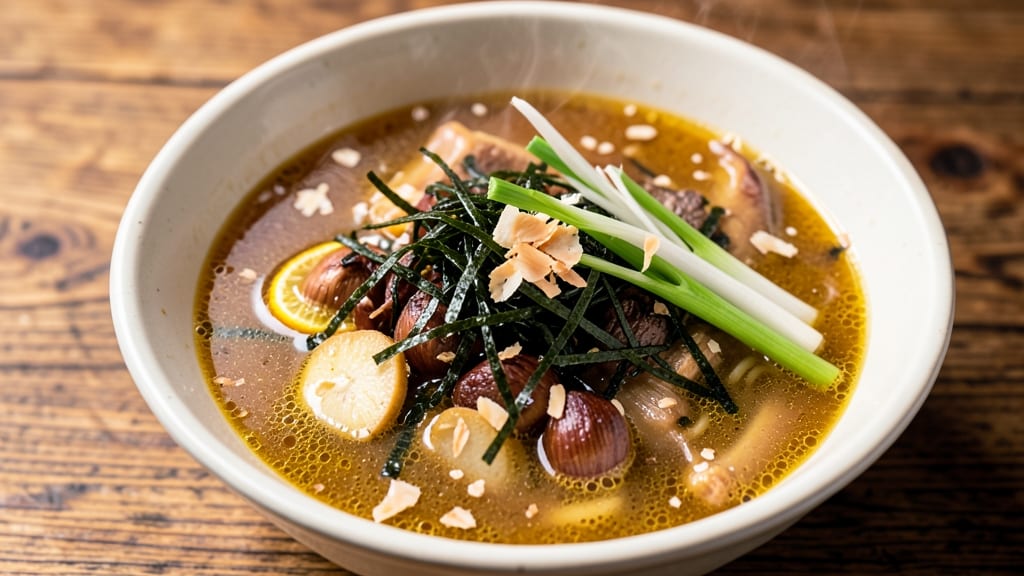
This authentic beef ramen broth recipe delivers the deep, complex umami flavor that defines Japanese ramen shops—rich, smoky, and layered with caramelized aromatics. The secret lies in a long, slow simmer that extracts gelatinous richness from beef bones while balancing traditional dashi and soy-based seasoning.
I’ve perfected this method over years of testing, ensuring every sip carries that restaurant-quality depth without shortcuts.
The broth builds in stages: charring garlic, ginger, and scallions unlocks their natural sweetness, while a blend of kombu and bonito flakes creates that signature umami foundation. Beef bones contribute collagen for a velvety texture, and a touch of miso adds subtle fermented complexity.
This isn’t just broth—it’s a flavor bomb that transforms simple noodles into a meal worth savoring.
By the time you assemble your bowl with chewy ramen noodles, silky chashu pork, and marinated soft-boiled eggs, you’ll taste the difference between store-bought and something truly special.
The aroma alone—smoky, savory, and slightly sweet—will have everyone at the table asking for seconds. Let’s create broth that rivals your favorite ramen shop.
This recipe delivers restaurant-quality results with traditional techniques, from the initial charring to the precise seasoning balance. The long simmer (8+ hours) ensures maximum flavor extraction, while the final adjustments—salt, sugar, and a splash of sesame oil—elevate it to authentic perfection.
Garnishes like green onions and nori complete the experience, making every bowl a masterpiece.
Ingredients for authentic beef ramen broth
Four pounds of beef bones and charred aromatics create restaurant-quality ramen broth.
| Ingredient | Amount | Notes |
|---|---|---|
| Beef Bones (Chuck or Knuckle) 🦴 | 4 lb | Split for maximum surface area |
| Garlic Cloves 🧄 | 8 cloves | Charred for deep flavor |
| Fresh Ginger Root 🌿 | ½ cup | Peeled, sliced into coins |
| Scallions 🧅 | 1 whole | White and green parts separated |
| Kombu Seaweed 🍃 | 1 piece | 8-inch strip, rinsed |
| Bonito Flakes 🐟 | ¼ cup | High-quality, unsalted |
| White Miso Paste 🥄 | 2 tbsp | Aged 1-2 years preferred |
| Soy Sauce 🍶 | ¼ cup | Japanese-style preferred |
| Sesame Oil 🫒 | 1 tbsp | Toasted, for finishing |
| Dried Shiitake Mushrooms 🍄 | 4 whole | Rehydrated, stems removed |
| Water 💧 | 12 cups | Filtered preferred |
| Salt 🧂 | 1 ½ tsp | Diamond Crystal kosher |
| Granulated Sugar 🍚 | 1 tsp | White granulated |
The beef bones are the heart of this broth—knuckle or chuck gives the most gelatinous richness. Local butchers often have these pre-split, but if not, ask for them to be cut into 2-inch pieces. For the aromatics, Asian markets carry kombu and bonito flakes that rival professional-grade. Char your garlic and ginger until fragrant—this step unlocks their natural sweetness and adds that smoky depth you taste in authentic ramen shops. The miso adds fermented complexity, so aged white miso (like Hokkaido brand) makes all the difference. Don’t skip the sesame oil—it’s the final touch that elevates this from good to restaurant-quality.
No bonito flakes? Dried shiitake mushrooms work in a pinch, but the umami won’t be identical. Substitute white miso for red if you can’t find it, though the color will differ. Running low on scallions? Green onions or leeks work, but the white parts are key for that clean, sharp flavor. For the soy sauce, Japanese-style (like Kikkoman) is non-negotiable—American versions lack depth. The sugar balances the salt, but if you prefer less sweetness, reduce it to ½ teaspoon. And if you’re making a big batch, double the water and adjust seasoning accordingly.
This broth tastes even better the next day—store for up to 5 days in the fridge, or freeze for 3 months in airtight containers. Skim off any fat that rises to the top before reheating. For leftovers, portion into ice cube trays and freeze for easy use in future ramen bowls. The miso and kombu can be stored in the fridge for 6 months once opened, while bonito flakes last indefinitely in a cool, dark place. If you’re prepping ahead, char your aromatics and store them in the freezer until ready to use—they’ll still deliver that smoky punch.
Why You'll Love This Recipe
- No-Bone Stress: The beef bones (chuck or knuckle) are the star, but honestly? They’re forgiving. You don’t need to blanch or parboil—just roast them until they’re golden, toss in the kombu and cold water, and let the magic happen. My slow cooker does the rest while I watch a movie.
- Umami Bomb: That first sip? Chef’s kiss. The kombu seaweed and charred garlic turn the broth into liquid gold—deep, savory, with just a whisper of ginger’s warmth. It’s the kind of flavor that makes you pause mid-slurp, like, “Wait, is this really just broth?”
- Weeknight Superhero: I make a double batch every Sunday because this broth is my secret weapon. Use it for ramen, stir-fries, or even a quick soup—it elevates everything. My kids ask for it more than takeout, and that’s saying something.
- Budget Goldmine: Beef bones are cheaper than you think, and a single pot feeds my family for days. Freeze leftovers in ice cube trays for instant flavor boosts later—no waste, all reward. Plus, kombu and ginger stretch the ingredients further than you’d expect.
Step-by-step instructions for authentic beef ramen broth
Here's how to build a rich, umami-packed broth that captures the soul of traditional Japanese ramen.
Char the Aromatics for Maximum Depth
Heat a dry skillet over medium-high heat and add the 8 cloves garlic cloves and 0.5 cup fresh ginger root. Let them cook undisturbed until they develop deep brown spots and release their fragrant oils—about 3-4 minutes. This charring creates complex caramelized flavors that form the foundation of your broth.
Transfer the charred aromatics to a cutting board and roughly chop them. I like to keep some texture so they release their essence gradually during simmering. Set them aside for now—they're about to become the heart of your broth.
Build the Broth Base with Beef and Kombu
In a large stockpot, combine the 4 lb beef bones (split for maximum surface area) with the 12 cups water. Add the 1 piece kombu seaweed (rinsed) and bring everything to a boil over high heat. Once boiling, reduce to a gentle simmer and skim off any foam that rises to the surface for the first 15 minutes—this ensures clarity.
The kombu adds natural glutamates that enhance umami, while the beef bones slowly release collagen for that signature ramen silkiness. Keep the heat at a steady medium-low—you're looking for a gentle bubble, not a rolling boil. This initial simmer should last about 1 hour before adding the other ingredients.
Layer in Umami Bomb Ingredients
After the initial hour, add the chopped charred garlic and ginger, the 1 whole scallions (white and green parts separated), and the 4 whole dried shiitake mushrooms (rehydrated, stems removed). Let everything simmer together for another 1 hour. The mushrooms will break down and infuse their earthy sweetness, while the scallions add a subtle oniony depth.
Here's where the magic happens: stir in the 2 tbsp white miso paste and 0.25 cup soy sauce. These ingredients dissolve completely and create that signature savory-sweet balance. Add the 1.5 tsp salt and 1 tsp granulated sugar now—they'll distribute evenly throughout the broth.
Finish with Bonito and Sesame Oil
In the final 10 minutes of simmering, sprinkle in the 0.25 cup bonito flakes. They'll dissolve completely, adding a delicate fishy umami that's characteristic of authentic ramen broth. Remove the pot from heat and let it sit for 5 minutes to allow the bonito to fully infuse.
Strain the broth through a fine-mesh sieve into a clean pot, pressing gently on the solids to extract every last bit of flavor. Discard the solids. Stir in the 1 tbsp sesame oil just before serving—this adds a beautiful aroma and subtle nutty finish that elevates the broth to restaurant-quality.
Serve Immediately for Peak Freshness
Taste your broth and adjust seasoning if needed—you might want to add a touch more soy sauce for saltiness or a pinch of sugar to balance. The broth should be rich, slightly sweet, and deeply umami with no bitterness. Serve it piping hot over ramen noodles, topped with your choice of toppings.
This broth develops even better flavors if made a day ahead and reheated gently. The flavors meld and intensify over time, creating that restaurant-quality depth that makes homemade ramen truly exceptional. Enjoy your umami-packed creation—it's worth every minute of the process!
Pro Tips For Making Authentic Beef Ramen Broth
- CHAR THE BONES HARD: Start with a screaming-hot pot—no half-measures—and blister the bones for 10-15 minutes until they’re deep brown and sticky. I learned this the hard way: skipping this step means a broth that tastes like it’s been simmering in its own hesitation.
- SLICE GINGER THIN: Use a mandoline or sharp knife to cut ginger into paper-thin sheets, not chunks. The surface area matters—thin slices infuse flavor without turning the broth bitter, and they dissolve cleanly so you’re left with smooth, aromatic depth.
- ADD KOMBU LAST: Toss the kombu in only during the final 10 minutes of simmering, or it’ll over-extract and leave a seaweedy aftertaste. Sounds weird, but it works: the brief soak gives you umami without turning your broth into a science experiment.
- STRAIN TWICE: First pass with a fine-mesh sieve catches debris, but run the broth through a cheesecloth-lined colander for the final strain. This removes the last of the grit and fat particles, giving you a silky, restaurant-quality clarity—no fancy filters needed.
Dietary considerations for these flavors
Gluten-Free Adaptations
Traditional ramen broth relies on soy sauce, which contains gluten—so for a gluten-free version, swap the 0.25 cup soy sauce with 0.25 cup tamari (a gluten-free alternative) or 0.25 cup coconut aminos.
Both provide a similar savory depth without the gluten. I also recommend using gluten-free miso paste, like San-J brand, which is certified gluten-free and delivers that same fermented umami. 🌱
Dairy-Free Considerations
This broth is naturally dairy-free, but if you're serving it with toppings like butter or cream, opt for dairy-free alternatives. For example, use olive oil or sesame oil> instead of butter when cooking chashu pork or garnishing your bowl.
Even the sesame oil in the broth itself is dairy-free, so no adjustments are needed for the base recipe.
Low-Sodium Options
Store-bought soy sauce and miso often contain high sodium levels, so for a lower-sodium version, reduce the 0.25 cup soy sauce> to 2 tbsp and use 1 tbsp low-sodium soy sauce> instead.
Similarly, cut the 1.5 tsp salt> in half and taste as you go—you might not need any additional salt at all. The kombu and bonito already contribute significant umami, so balance is key.
Vegetarian Substitutions
For a vegetarian broth, replace the 4 lb beef bones> with 4 lb chicken bones or mushrooms> (like king oyster or shiitake). Boost umami with an extra 1 tbsp miso paste> and add 1 tbsp soy sauce> (or tamari).
I also recommend adding 1 tbsp dried shiitake powder> for an extra earthy depth. The kombu and bonito can be omitted, but dried kombu can be used alone for a vegetarian dashi.
Nut-Free Adjustments
Sesame oil is the only nut-related ingredient in this recipe, but if you're avoiding nuts, simply omit it or replace it with 1 tsp toasted olive oil> for finishing.
The broth will still be rich and flavorful—just slightly less aromatic. For garnishes, avoid sesame seeds and opt for toasted nori strips or chopped green onions> instead.
Nutrition facts
Frequently asked questions
Why does charring the garlic and ginger matter so much?
Charring unlocks deeper, caramelized flavors that form the foundation of authentic ramen broth. The process creates complex Maillard reactions, transforming simple aromatics into smoky, sweet compounds that dissolve beautifully into the broth during simmering. This step is what gives restaurant-quality ramen that signature depth you can't get from raw aromatics.
Can I make this broth in a slow cooker instead of a stockpot? Yes, but with adjustments! Use a 6-quart slow cooker and cook on low for 10-12 hours instead of 8 hours on the stove. The longer cook time works better for extracting collagen from bones. Just
What's the best way to store leftover broth?
For maximum flavor retention, store in airtight containers in the fridge for up to 5 days. For longer storage, freeze in ice cube trays or silicone molds—this makes it easy to thaw just what you need. When reheating, warm gently on low heat and avoid boiling to preserve the delicate flavors.
My broth turned cloudy—did I do something wrong?
Not necessarily! A slight cloudiness is normal from bone marrow and natural particles. For crystal-clear broth, strain through a cheesecloth-lined sieve after simmering. If it's extremely cloudy, you may have boiled too vigorously—next time maintain a gentle simmer throughout.
How can I make this broth more vegetarian-friendly?
Replace beef bones with shiitake mushrooms or kombu seaweed (soaked in hot water for 20 minutes) for umami depth. Add 1 tbsp dried shiitake powder and boost miso to 3 tbsp. The kombu provides natural glutamates similar to bonito, while mushrooms add earthy richness. Simmer for 4-6 hours to extract maximum flavor.