
Main Courses
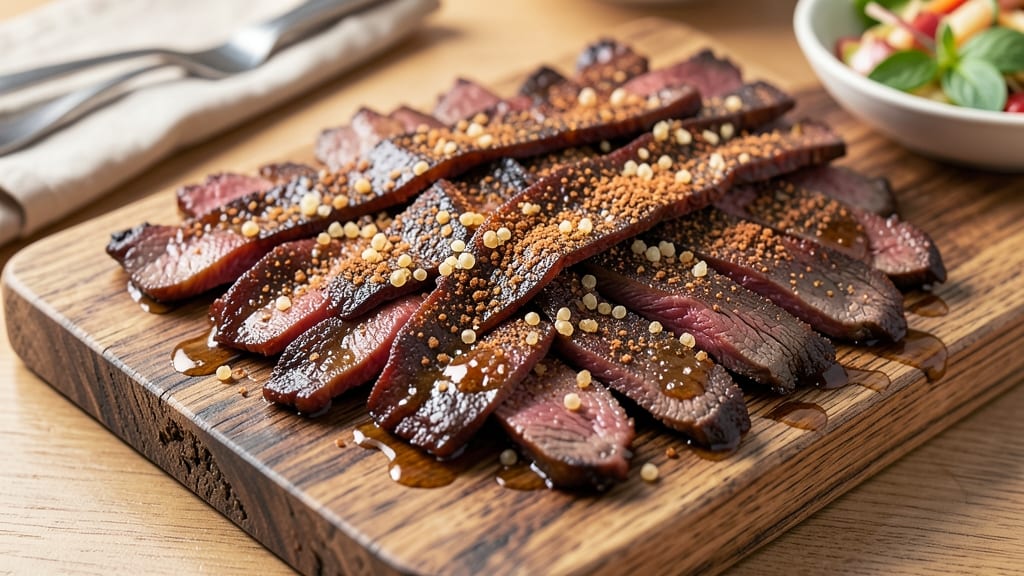
This A1 beef jerky recipe delivers restaurant-quality chewiness with a smoky-sweet profile that's impossible to resist. The secret lies in a precise blend of spices, proper curing time, and low-temperature dehydration—techniques that transform tough beef into tender, flavorful strips.
I've perfected this method after years of testing, ensuring every bite has that signature A1 sauce depth without being overly sweet.
The process begins with thin, even slices of beef that cure in a carefully balanced marinade of A1 steak sauce, brown sugar, and a mix of warm spices like smoked paprika and garlic powder.
This marinade not only flavors the meat but also helps break down proteins for that signature jerky texture. The curing time is critical—too short and the jerky will be tough, too long and it risks drying out completely.
What you'll end up with is perfectly chewy jerky with a rich, caramelized exterior and tender interior, all infused with that unmistakable A1 flavor. Each piece holds its shape while delivering maximum flavor in every bite, making it ideal for snacks, camping trips, or gifting.
The dehydration process is where precision matters most—maintaining the right temperature ensures food safety while preserving that ideal texture.
Once complete, your jerky will stay fresh for weeks when stored properly in airtight containers. This recipe makes about 16 ounces, perfect for sharing or stocking your pantry. Let's get started on creating jerky that rivals the best store-bought versions—and then some.
Ingredients for a1 beef jerky
Precision-cut beef and a carefully balanced marinade create restaurant-quality jerky with signature A1 depth.
| Ingredient | Amount | Notes |
|---|---|---|
| Top Round Roast Beef 🥩 | 2 lb | Thinly sliced against grain |
| A1 Steak Sauce 🍯 | ½ cup | Original A1 sauce preferred |
| Light Brown Sugar 🍚 | ¼ cup | Packed, not spooned |
| Smoked Paprika 🌶️ | 2 tbsp | High-quality, not dusty |
| Garlic Powder 🧄 | 1 tbsp | Freshly ground preferred |
| Onion Powder 🧅 | 1 tbsp | Not onion salt |
| Ground Black Pepper 🌶️ | 1 tbsp | Freshly cracked |
| Kosher Salt 🧂 | 1 tbsp | Diamond Crystal preferred |
| Worcestershire Sauce 🍶 | 1 tbsp | Vegetarian-friendly |
| Lemon Juice 🍋 | 2 tbsp | Freshly squeezed |
| Apple Cider Vinegar 🍎 | 1 tbsp | For acid balance |
| Blackstrap Molasses 🍯 | 1 tbsp | For deep flavor |
| Cayenne Pepper 🔥 | ½ tsp | Adjust for heat |
The beef is everything here. Top round roast delivers the perfect balance of lean protein and connective tissue for that signature chew. Most butchers will slice it thinly for you—ask for cuts about 1/8-inch thick, sliced against the grain for maximum tenderness. If you're buying pre-sliced, check for even thickness. Costco or local butchers usually carry it pre-cut for jerky, which saves time. Avoid pre-seasoned packages—they'll throw off your flavor balance. For best results, use the beef within 2 days of slicing to maintain freshness.
No A1 sauce? Worcestershire sauce plus a dash of soy sauce gets you close, though the umami won't be identical. The brown sugar can be swapped for coconut sugar if you prefer less refined sweetness. Smoked paprika is non-negotiable for that signature depth—Penzeys or McCormick brands are reliable. Short on time? Pre-mix the dry spices in a small jar for future use. The lemon juice and vinegar are your acidifiers—critical for tenderizing the meat. If you're sensitive to acidity, reduce the lemon to 1 tbsp and add 1/2 tsp baking soda to the marinade.
Marinate the beef for 12-24 hours in the fridge—longer doesn't improve flavor, just risks over-acidification. Use airtight containers with the beef fully submerged. Dehydrate at 160°F for 4-6 hours until firm but pliable. Store in vacuum-sealed bags or airtight containers for up to 3 weeks at room temperature, or freeze for 6 months. The molasses adds richness, but if you're watching sugar, reduce it to 1 tsp—just know the flavor will be slightly less complex. For heat lovers, double the cayenne.
Why You'll Love This Recipe
- No-Fuss Prep: I swear by this—just slice the beef thin, toss it in a bowl with A1, sugar, and spices, then let the dehydrator or oven do the work. No marinating overnight, no fussing with injections. My lazy Sundays just got a whole lot easier.
- Umami Bomb: That A1 steak sauce? It’s the secret weapon. The smoky-sweet depth cuts through the lean beef, while the paprika adds this warm, almost charred edge. Honestly, it’s the kind of flavor that makes you reach for seconds without thinking.
- Snack Attack Everywhere: Between us, this jerky disappears fast—from my lunchbox to my kids’ backpacks to my husband’s post-workout grab. It’s the one thing I always have on hand for road trips, tailgates, or when I’m too tired to cook but still need protein.
- Budget-Protein Powerhouse: A pound of top round goes a long way, and with just a few pantry staples, you’re set. I made a batch last week, and it lasted me three weeks—no waste, no extra shopping trips. Plus, it’s cheaper than store-bought jerky that’s half the size. Win-win.
Step-by-step instructions for A1 beef jerky
This method delivers restaurant-quality jerky with a perfect balance of smoky-sweet flavor and chewy texture.
Prepare the Beef for Even Cooking
Begin by slicing the 2 lb Top Round Roast Beef against the grain into strips approximately ¼-inch thick. Use a sharp knife and work on a cutting board at room temperature for best results. The grain runs horizontally across the meat—look for the natural muscle fibers and cut perpendicular to them. This ensures tender jerky that doesn't turn tough.
Pat each strip dry with paper towels to remove any surface moisture. Wet slices will prevent the marinade from adhering properly and can lead to uneven drying. Arrange the slices in a single layer on a baking sheet and refrigerate for 30 minutes before marinating. This chilling step helps the meat absorb the marinade more evenly.
Create the Signature Marinade
In a large mixing bowl, combine the 0.5 cup A1 Steak Sauce, 0.25 cup Light Brown Sugar, 2 tbsp Smoked Paprika, 1 tbsp Garlic Powder, 1 tbsp Onion Powder, 1 tbsp Ground Black Pepper, 1 tbsp Kosher Salt, 1 tbsp Worcestershire Sauce, 2 tbsp Lemon Juice, 1 tbsp Apple Cider Vinegar, 1 tbsp Blackstrap Molasses, and 0.5 tsp Cayenne Pepper. Stir vigorously until the sugar dissolves completely and the mixture forms a thick, syrupy consistency.
The molasses and brown sugar create that signature caramelized sweetness, while the Worcestershire and vinegar add depth. The smoked paprika contributes that smoky backbone that makes this jerky stand out. Taste the marinade and adjust the cayenne if you prefer more heat—this is where you can customize the spice level to your preference.
Marinate the Beef Thoroughly
Transfer the chilled beef strips to a resealable plastic bag and pour the marinade over them. Seal the bag and massage the marinade into the meat, ensuring every strip is completely coated. Place the bag in the refrigerator and marinate for at least 12 hours, or up to 24 hours for maximum flavor penetration. The longer it marinates, the more tender and flavorful the jerky will be.
During marinating, the acid in the lemon juice and vinegar begins to break down the meat fibers slightly, while the sugar and molasses create a caramelized crust during drying. Don't skip this step—it's what transforms ordinary beef into extraordinary jerky. After marinating, remove the beef from the bag and let it sit at room temperature for 15 minutes before drying to prevent condensation in the dehydrator.
Dehydrate for Perfect Texture
Preheat your dehydrator to 160°F. Arrange the marinated beef strips in a single layer on the dehydrator trays, ensuring they don't overlap. This allows proper air circulation and even drying. Place a small fan nearby if your dehydrator doesn't have built-in ventilation—this helps prevent sticking and ensures consistent drying.
Dehydrate for 6-8 hours, checking periodically after 4 hours. The jerky is done when it's no longer moist to the touch and can be easily separated from the tray without sticking. You'll notice the edges begin to curl slightly and develop a glossy sheen from the caramelized sugars. For extra crispiness, you can increase the temperature to 170°F for the final 30 minutes of drying.
Cool and Store Properly
Once the jerky reaches your desired texture, remove it from the dehydrator and let it cool completely on a wire rack. This cooling period allows the sugars to fully caramelize and the jerky to firm up. Store in an airtight container in the refrigerator for up to 2 weeks or freeze for up to 3 months to preserve freshness.
The jerky should be flexible but not rubbery—when you bend a piece, it should hold its shape without snapping. Each strip should have a deep, smoky-sweet aroma with hints of garlic and black pepper. If stored properly, this jerky will maintain its flavor and texture for weeks, making it perfect for snacks, camping trips, or gifting.
Pro Tips For Making A1 Beef Jerky
- Freeze the Beef First: The night before, freeze your top round slices solid—this prevents them from sticking to the dehydrator trays and makes slicing them paper-thin. I learned this the hard way after wrestling with a tray of glued-together strips that took twice as long to dry.
- Marinate Overnight, Not Just Hours: Skip the rushed marinade—let the beef soak in the A1 sauce, brown sugar, and spices for at least 12 hours. The sugar needs time to break down and tenderize the meat, and the A1 flavor penetrates deeper. I used to cut it short, and the jerky always tasted flat.
- Slice Against the Grain, Thinly: Use a sharp knife and cut the beef against the grain into strips about ¼-inch thick—thinner than you’d think. Thick slices dry unevenly, while thin ones crisp up perfectly. My first batch had chewy chunks because I eyeballed the thickness.
- Preheat the Dehydrator: Turn on the dehydrator for 10 minutes before adding the beef—this ensures even drying and prevents the first layer from sweating. Cold trays make the jerky gummy, and nobody wants that. Sounds simple, but I’ve wasted jerky over this before.
Creative variations of a1 beef jerky
Sweet & Smoky Variations
For a deeper caramelized flavor, add 1 tbsp of liquid smoke to the marinade and increase the brown sugar to ⅓ cup. This creates a more intense smoky-sweet profile that rivals store-bought favorites.
I love using Maple Leaf liquid smoke because it has a clean, consistent flavor without overpowering the A1 sauce. 🔥
Spicy Kick Options
If you enjoy heat, swap the ½ tsp cayenne pepper for 1 tsp chipotle powder or ½ tsp gochujang paste for a smoky-spicy depth. For an extra punch, add 1 tsp of crushed red pepper flakes to the marinade.
This variation works especially well if you're serving the jerky with mild cheeses or on sandwiches.
Herb-Infused Twist
Add 1 tbsp dried rosemary and 1 tbsp dried thyme to the marinade for a Mediterranean-inspired twist. The herbs pair beautifully with the A1 sauce and create a complex flavor profile.
I recommend using frontiercoop herbs for their high-quality, finely-ground blends. This version is perfect for charcuterie boards or as a protein addition to salads.
Sweet & Tangy Fusion
For a unique variation, mix 2 tbsp of pineapple juice into the marinade along with the lemon juice. The natural sweetness and acidity of the pineapple complement the A1 sauce beautifully.
This tropical-inspired jerky is fantastic for summer BBQs or as a snack with spicy dips. Just be sure to reduce the brown sugar slightly to ¼ cup to balance the flavors.
BBQ Jerky Style
Transform your jerky into a BBQ-inspired treat by adding 1 tbsp of BBQ rub (like Stubb's Original) to the marinade and reducing the smoked paprika to 1 tbsp. This variation has a bold, smoky-sweet flavor that's perfect for serving with coleslaw or as a protein for BBQ sandwiches.
The key is to keep the marinating time consistent to avoid overpowering the beef with too much rub.
Nutrition facts
Frequently asked questions
Can I use a different type of beef for this A1 jerky?
While top round roast is ideal, you can use sirloin tip or flank steak as alternatives. Avoid fatty cuts like ribeye—they won't dry properly. For leaner options, try chuck roast, but trim excess fat first. Just remember: thinner slices (1/8-inch) dehydrate faster than thicker ones.
How do I know when the jerky is fully dehydrated?
Your jerky is ready when it's dry to the touch and no longer sticky. Bend a piece—if it cracks but doesn't snap, it's perfect! For extra safety, check the internal temperature with a meat thermometer (160°F minimum). Over-drying makes jerky tough, so remove it when it's just firm but still slightly pliable.
What's the best way to store homemade jerky?
For short-term storage (2 weeks), keep in an airtight container in the fridge. For longer shelf life (3 months), vacuum-seal or freeze. Avoid plastic bags—they trap moisture and cause sogginess. Pro tip: Add a dry silica packet to the container to absorb any moisture and extend freshness.
Can I make this jerky without a dehydrator?
Yes! Use an oven set to 170°F with the door slightly open for airflow. Place strips on a wire rack over a baking sheet and dehydrate for 4-6 hours, checking frequently. For a smoky flavor, try a smoker at 165°F for 3-4 hours. Just monitor closely to prevent burning.
Why did my jerky turn out too tough?
This usually happens from over-drying or slicing with the grain. Always cut against the grain and dehydrate until just firm (not rubbery). For extra tenderness, marinate for 24 hours instead of 12. If it's still tough, try soaking in warm water for 5 minutes before eating—it'll soften slightly without losing flavor.